TL;DR
When planning a custom golf simulator installation, particularly for high-end residential or commercial applications, the devil is in the details, yet often those details aren’t explicitly itemized in initial quotes. Reputable installers, like ourselves, include all necessary components from cabling and mounts to essential hardware for a seamless setup, even if they aren’t line-itemed for simplicity. For commercial golf simulator projects, whether it’s a dedicated business, a university facility, or an office entertainment space, the complexity escalates significantly. These projects demand installers with robust experience collaborating with general contractors, architects, and facilities teams, possessing the requisite insurance, licensing, and an understanding of ADA compliance, occupancy, and traffic flow.
This collaborative approach is crucial to avoid delays that can ripple through an entire construction timeline. Furthermore, a truly bespoke home golf simulator or luxury golf simulator room installation goes beyond standard components. It involves thoughtful design choices, such as custom marine-grade vinyl in specific colors or textures to match a home’s aesthetic, ensuring the simulator integrates flawlessly rather than appearing as an afterthought in a multi-million dollar property. The selection of technology, such as ceiling-mounted versus floor-based launch monitors, is also tailored to the specific use case and client preferences, always prioritizing cutting-edge, responsive solutions from brands committed to continuous innovation.
Beyond the Itemized Quote: What’s Included in a Custom Golf Simulator Installation?
Stephen: Going on to the next question here. How can buyers tell whether a golf simulator quote is complete or if it’s missing important costs?
Cliff: It’s a great question, and it’s it’s really hard to answer, honestly, because there’s so many components that go into a golf simulator and the proposal., we like to keep our proposals fairly simple. Right? We don’t list every single item. Right? I don’t I don’t list every HDMI cable and every projector mount and every TV mount and, the bungees that the screen attaches to the wall with., if you’re talking about a local golf simulator installer, I would just ask the simple question of, and get it in writing. Like, what do I need to provide? Right? Mhmm. To be able to go play golf when you’re finished with your job, what is the consumer do I need to provide?
Cliff: And if they say much other than golf clubs and golf balls, that you’re you’re missing something. And, again, I’d get it in writing. Right? What as a consumer do I need to provide to make this thing functional?
But, it would just be one, I do some googling. Right? What are the most important components of a golf simulator? Right? Your launch monitor, projector, your gaming computer. Is my gaming computer gonna be spec to support the right level of resolution that we’re gonna be, trying to achieve in the graphics quality? The software, is that part of the deal, or am I, you paying for that with a credit card of my own?
Cliff: And we’d like customers to do that so that they own the relationship with the vendor., putting turf, hitting that screen, mounting hardware for everything, wiring, golf club storage. Do I need that? Do I want that? So, it the most basic answer is just what do I need to provide as a consumer to make this thing functional and enjoyable and get it in writing? But then there’s, some gut checking that you should do also just to be informed. Tyler, jump in there.
Tyler: Yeah. No. I think exactly what you said. Right? It’s it’s it’s one of those things where probably the most important piece is the client understanding what do they need to provide to complete the golf simulator.
And I know in our case, the answer is essentially nothing other than showing up, but, I think that’s the most important piece because that will tell you what’s missing. And just like you said, Cliff, the idea that we don’t include like, even though we do include all the bells and whistles in terms of cables and cat six and HDMI and all those pieces that are needed, just for simplicity’s sake, we don’t always include that specifically on the quote as a line by line item.
Tyler: I’ll just go back to what you said of, having the client understand what do they need to bring in order to complete and be able to leverage and you’d utilize their simulator. That’s a key probably the simplest question to ask to understand what could be potentially missing in that quote. Yep.
Stephen: On. What experience matters most when you’re choosing a golf simulation installer for a commercial project?
The Nuances of Commercial Golf Simulator Projects
Tyler: Yeah. I’ll I’ll jump into this one because I get involved with a lot of our commercial projects. Mhmm., ultimately, just the nature of our commercial project, whether it’s helping a client build their own commercial simulator business where they’ve got membership or you pay for time to use the simulators or, in other scenarios where it might be inside of a college, university for their golf team, or as part of an office building, maybe for a lawyer’s office for an entertainment space. There are just a variety of more logistics and teams to work with in those situations. And so having an installer that’s, work with larger GCs, maybe work with an architect, has the insurance coverage needed for those types of commercial builds and the licensing involved that’s required as well typically., it’s it’s a lot of being able to play nicely and work well together with all these other groups.
Tyler: It’s not just, in a residential situation, it’s typically, we’re usually working with the client. We’re handling all those aspects. In a commercial project setting, it is working with, as I mentioned before, GCs, facilities teams, architects, and the client, along with any other subs that maybe the GC is using in addition to our to our own crew. It’s having that experience to work in those situations, and there are a variety of levels of commercial projects.
Like I said, sometimes if you’re doing, a commercial simulator business and maybe, a smaller strip mall space, that’s a different experience than working again in something like a larger university or commercial office building and the level of architect or builder that you’re working with in those situations.
Tyler: It’s it’s back to what I think we’ve said in a lot of places. Being able to tell your clients, we have done this work. Here are a variety of examples, not only just showing them pictures, but here’s how we work with those other groups and all the other basic business requirements of things like insurance, licensing, understanding things related to occupancy and the flow of traffic, and ADA compliance is very big in their commercial space as well too. It’s there are so many more factors to consider when doing commercial projects that you really need somebody who has been there and done that to have a seamless experience and not just figuring that out on the fly.
Tyler: And the biggest impact to you as a potential client in there is if the installer starts to delay things, then that causes a waterfall trickle down effect for everything else, and then all of a sudden your entire project gets pushed out., Clint, feel free to add some other pieces there. But, ultimately, there are more logistics, more players Yep.
And more regulations in the commercial space. Having somebody who’s got experience with those, knows how to handles that handle them, ideally knows how to handle them, again, at different levels of those complexities as you get to larger and larger commercial projects Yep. Are very key.
Cliff: No. You nailed it. Yeah. The level of coordination has increased. We have Tyler’s done a great job of building out infrastructure for us with coordination documents. Right? Who owns what? Who’s, does the GC own the scope? Does Forefront own the scope? ? So on knowing that, setting expectations beforehand, and all the coordination is super important. The only other thing I’d add is, having some level of project management and coordination, a dedicated person or team that’s gonna handle that for you. In a commercial setting, you’re gonna need more of that. Right? So, those sorts of questions are super important.
Stephen: That makes total sense. When we’re when we’re talking about residential versus commercial, I’m I’m glad that we’re getting into a little bit of the commercial aspect of the things because we’ve talked so much about the, the residential so far. Going on to the next question here, what experience matters most when you’re choosing an installer specifically for a luxury home installation?
Designing a Luxury Home Golf Simulator Room
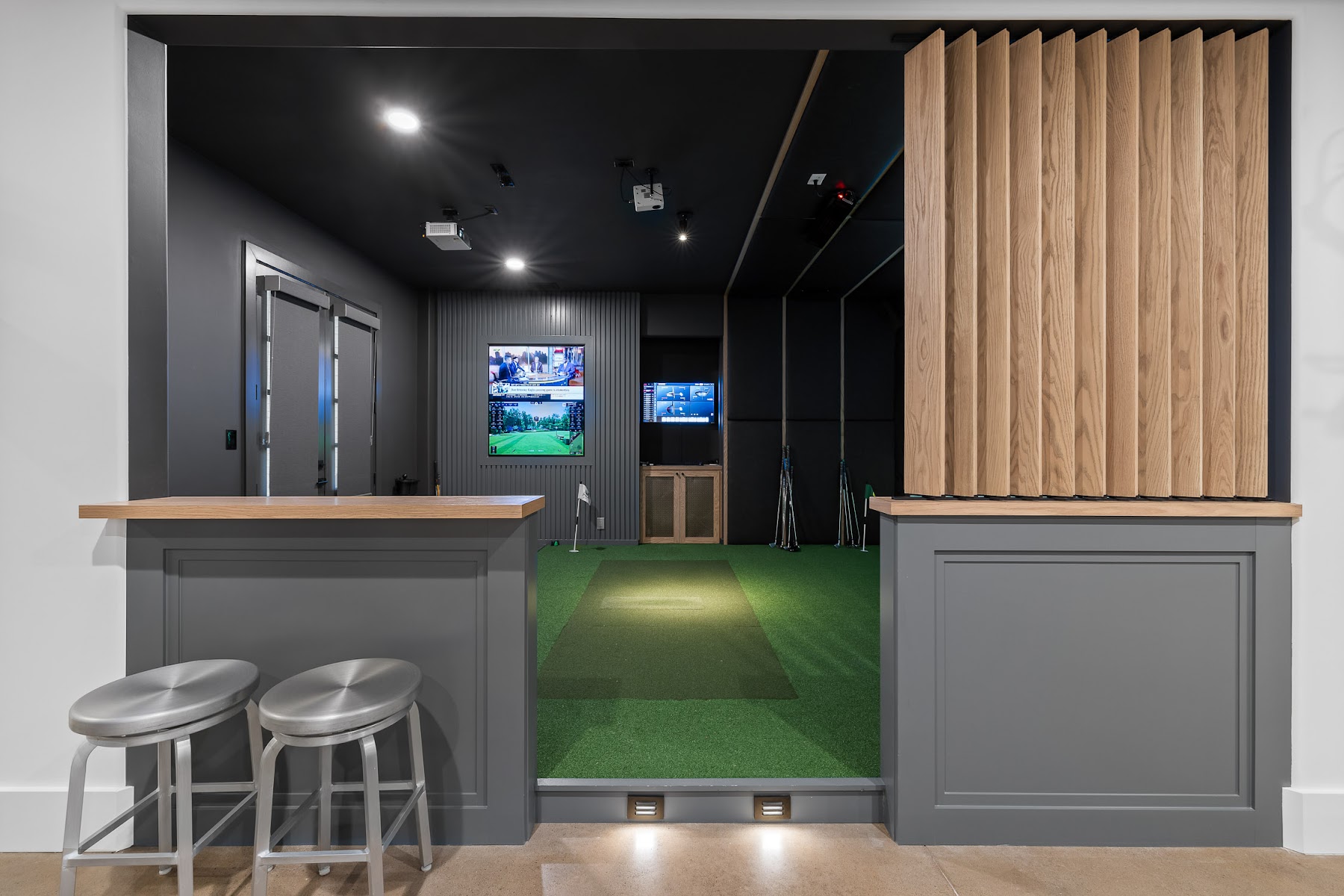
Cliff: Yeah., it’s similar to a lot of what we talked about. I might just add, similar to what we just talked about on the commercial side. Hey. How are you gonna coordinate with my interior designer or my decorator or my builder or my GC? Right? So we work with those groups all the time. We we’re really good at playing nice with them and, consulting them on the front end., nothing’s gonna upset a luxury home build more than a golf simulator installer coming in and just throwing a standard golf simulator into, a 1.5 or 2,000,000 or 3 or $5,000,000 house. Yeah. And the designer’s like, woah. Woah. Woah. This doesn’t match our design aesthetic. This doesn’t, flow with the look and feel of the house, and the materials don’t match.
Cliff: Right? So, I think that’s when you start talking really luxury, you’ve gotta be able to play nice again with multiple stakeholders, and that could be, again, designers, the general contractor. They’re gonna have an audio visual person doing a lot of low voltage. And I think an important question to ask there is, who owns the scope? And we’re the first to say, hey. We’ll hand that scope over to the builder, the designer, the architect. Right? And if you’ve got somebody there doing framing and drywall, it makes sense for them to own that for you. Right? We’re we’re not gonna be selfish and say, hey. We need to own all that scope because we want, added revenue or whatever. Right?
Cliff: We’re gonna do what’s best for the client. Similar with AV. Right? If you’ve got an audio visual person running TVs and speakers all throughout your house, they should handle that in your SIM room too, and we just connect in with them. And now you could say, hey, Alexa, turn on the golf simulator and your home automation and all your speakers work in concert with your golf simulator as opposed to it being a separate entity. Right? So I’d say just it’s it goes back to some of those central questions we’re talking about is ability to coordinate with multiple groups, play nice, and integrate into a process that’s already happening.
Tyler: Yeah. I think and, know, a very nice to have on the experience scale, especially for luxury home simulator spaces, is having some of that construction DNA in that space within the company. Yep. I know it’s something at the forefront, not only our crews and our cofounder. One of our cofounders has a lot of that prior construction DNA working in high end homes with renovations, doing framing, electrical, all those types of things. That, I think, is a key factor and differentiator on the experience scale is folks who know how to work in that space from a core construction perspective. They’ve got all those considerations in mind in addition to understanding how a golf simulator technology works, what it’s like to be a golfer in a simulator. Those are some key experience considerations as well.
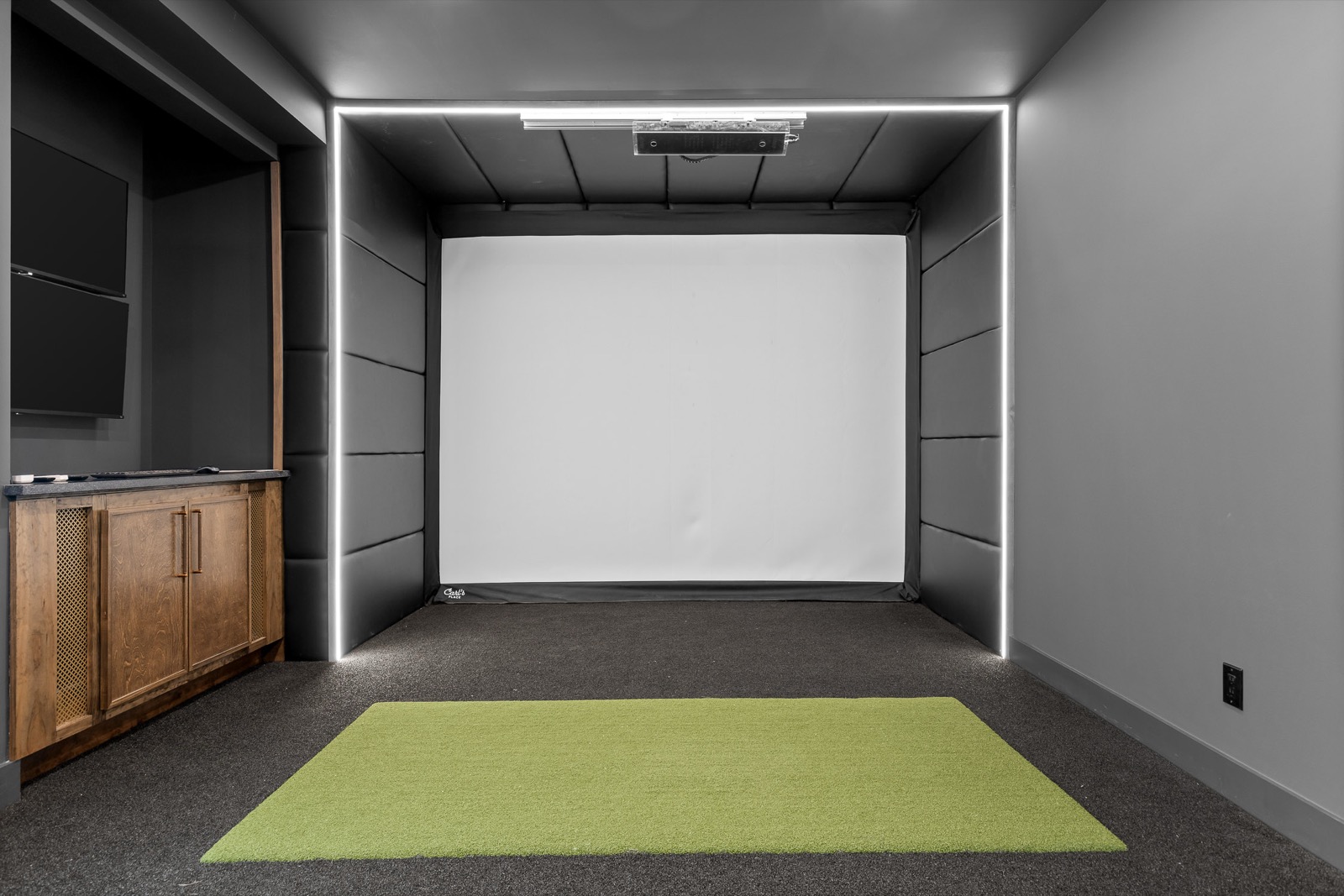
Cliff: One last super quick one I’ll add there is just, do I have options? Right? What materials can I select from? Right? Do I have different options for putting turf colors, wood trim, LED lighting? Can I can I change the padding you’re gonna build to be different materials? Right? Like, a lot of people do black marine grade vinyl to wrap the pads in, but maybe I wanna do different colors to match my aesthetic, or I wanna do it in a velvet or, a crushed velvet or something.
Right? So when we’re talking luxury, right, do I have options? Can I get really fun and creative with the design, and then can that firm go implement that in an effective way? Would be a very big question I’d ask on a luxury space.
Stephen: Yeah., you’re, you guys know this more than anyone, but if you’re working with an interior designer, that’s gonna be their first question. Feel like, do are there options?
Cliff: Yep. 100%.
Stephen: What are my options exactly? How far can I take this? Exactly. Mhmm. Going on to the next. How should buyers compare different golf simulator technology recommendations?
Tyler: Sure. I’ll I’ll give some high level considerations. Mhmm. One is just the nature of the technology capabilities of the launch monitors themselves, and I’ll I’ll just focus on launch monitors., simple things are considered, do the what ball metrics do they collect and measure? What club metrics do they measure? So that’s a simple one because some folks are very, very keen on very specific metrics of certain type of spin or wanting to know their club face coming in. And depending on the launch monitor brand, some offer that, some don’t. That’s that’s one consideration. Another one to that is just the overall ecosystem around those launch monitor brands. We see more and more companies integrating AI into their software, finding things like AI swing trainers so you can you have regular feedback while you’re in the simulator, when you’re not necessarily working with your coach.
Tyler: And as part of that, they offer things like swing cameras or balance mats, and that will continue to evolve. What is the overall ecosystem for that brand? I think related to that, it is how frequently are those brands, updating and continuing to push the envelope of what golfers and simulator golfers in particular are looking for and adding to the overall, scope of features that they offer and, how responsive have they been to community feedback. Another piece that’s a bit more, on the budgetary side, but just, what are the what’s the subscription model look like? The large majority of Launch Monitor brands today have moved to a subscription model, not every single one of them. But that’s a ongoing cost or long term cost type consideration as well too. What’s the subscription tier that I need to be at to get the types of features that I want that are outside of just the standard range or maybe some basic course options.
Tyler: One other one I mentioned is just, again, how well do they interact with other third party simulator software. GS Pro is one that we’re we’re big fans of as the core golf course simulation software, and most launch monitor manufacturers integrate and work with it. Some don’t. That’s, if it’s very important for you to be able to do GS Pro or TGC or some of the other simulation third party simulation softwares out there, it’s important to know does that launch monitor brand work with it. And then maybe the last piece, we’ve kinda talked about this before, is just what works for your space. Again, typically, we like to focus on ceiling based and camera based launch monitors in a lot of our simulator builds, but sometimes it may make more sense to have a floor based launch monitor or one that’s portable that you can take out to the course and has a battery in it.
Tyler: Those are, a lot of the key considerations to come up with almost a matrix of what’s gonna make the most sense for what a client, the golfer, is typically looking for.
There’s never a, there’s not usually not a one all, be all type option. There’s usually two or three that can typically work, and then we can get into some of the nitty gritty of what the client’s really looking for and helping them narrow it down to the ideal launch monitor for them.
Cliff: Yeah. Yeah. I think really well really well said., maybe highlighting again little the swing cameras. Right? You mentioned the swing AI swing trainers. Do you want swing cameras so you can do, all of the launch monitors give you good data about your club and your ball, obviously, different levels and different amounts of data that you can get. But do you wanna see your swing externally so you can work on the things that your golf coach is teaching you about? I have swing cameras in my simulator, and I get I get golf lessons in my basement. I schedule them.
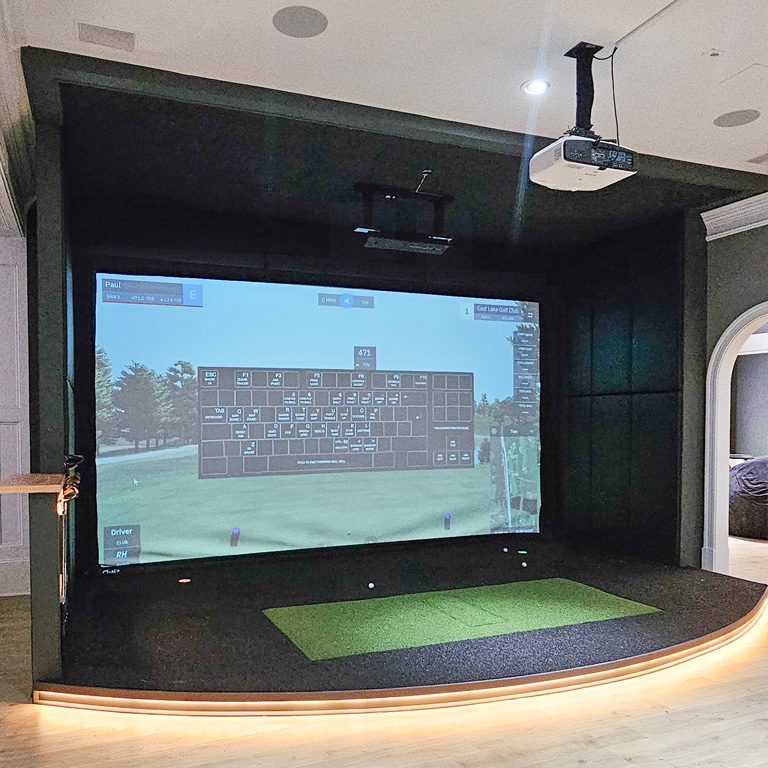
Cliff: It’s a Zoom call. He can see me, talk to me, give me feedback, see my metrics. There’s things like that you wanna think about. And if you think about it on the front end, it makes it easier., projection is certainly important. We’ve talked about ambient light, four k versus ten eighty p. Those are, big can be reasonably big cost drivers. If you have a lot of ambient light, you do wanna invest in a higher end projector with higher lumens. Right? Pretty standard is three to 4,000 lumens, but if wanna get up into the six or 7,000 lumen range, that can support a lot of ambient light.
Cliff: That’s important. And I would say, do you want other technologies involved? And that’s great to plan for on the front end. Like, are we thinking about a multi sport simulator? Are we thinking about shooting simulators, racing simulators? Like, have we considered that stuff on the front end in our proposal? Because doing it on the front end is way cheaper than having to go back and retrofit it after. Right. Yeah. Those are the main yeah. Those are probably the main pieces to think about.
Stephen: It really seems like there are so many variables. It almost seems like the short answer of that is any recommendations should be given after you guys have a conversation and ask those questions of what they’re looking for. If somebody’s not asking those questions, then you shouldn’t take the recommendation, it sounds like.
Cliff: I would say our model is very consultative. Right? We always start with what are you trying to achieve? What do you want this to be? What’s your vision for this? And then we help you fill in the components and pieces to achieve that. Yeah. But, yeah, if you’re if you’re designing and building a goal simulator and not having deep conversations about what you wanna achieve and what your goals are, you’re probably gonna miss a bit.
Comparison at a glance
| Consideration | Residential Build | Commercial Build |
|---|---|---|
| Stakeholders | Homeowner, sometimes designer | GC, architect, facilities team, client |
| Compliance | Standard residential permits | ADA, occupancy, traffic flow |
| Insurance/licensing | Standard contractor coverage | Higher commercial coverage required |
| Project management | Single PM sufficient | Dedicated PM plus coordination docs |
| Ambient Light Level | Recommended Lumens | Typical Use Case |
|---|---|---|
| Low (controlled basement) | 3,000-4,000 | Standard residential sim room |
| High (windows, open space) | 6,000-7,000 | Commercial spaces, sunlit rooms |
Frequently Asked Questions
What’s typically included in a custom golf simulator installation that might not be itemized on a quote?
A comprehensive custom golf simulator installation, especially from experienced professionals, will include all necessary ancillary components like HDMI cables, projector mounts, TV mounts, and the specific bungees for screen attachment. While these might not be line-itemed on a quote for simplicity, they are factored into the overall project scope to ensure a complete, functional setup without hidden surprises. This approach ensures a seamless integration into your space, whether it’s a home golf simulator or a more complex commercial setup.
What are the key considerations for a commercial golf simulator design build?
A commercial golf simulator design build demands an installer with specific qualifications beyond just technical expertise. This includes experience working with general contractors and architects, possessing comprehensive insurance coverage, and holding all necessary licensing. Furthermore, understanding critical aspects like ADA compliance, occupancy limits, and traffic flow is paramount. The ability to collaborate effectively with various stakeholders, including facilities teams and other subcontractors, is crucial for timely project completion and avoiding costly delays in a commercial golf simulator project.
How does a professional installer ensure a luxury golf simulator room integrates with existing high-end aesthetics?
Integrating a golf simulator into a luxury home or club environment requires meticulous attention to aesthetic detail. A professional installer will offer customization options beyond standard components, such as selecting specific colors or textures for padding and enclosures to match the room’s existing decor. This bespoke approach ensures the home golf simulator or luxury golf simulator room becomes a cohesive, elegant extension of the space, rather than a standalone functional unit, reflecting the overall design intent of a high-value property.
What are the advantages of using ceiling-based versus floor-based launch monitors in a custom golf simulator setup?
While we often recommend ceiling-based, camera-driven launch monitors for their precision and seamless integration into custom golf simulator builds, the optimal choice depends on the specific application. Floor-based or portable launch monitors may be more suitable for certain scenarios, such as when flexibility is desired or space constraints dictate. A professional custom golf simulator installation service will consult with you to determine the best technology for your needs, considering factors like accuracy, user experience, and the overall design of your indoor golf simulator lounge.
Why is it important for a golf simulator installer to have experience with large-scale commercial projects and general contractors?
For commercial golf simulator projects, especially those within universities, office buildings, or dedicated simulator businesses, working with an installer experienced in large-scale commercial builds is critical. Such an installer understands the complexities of collaborating with general contractors, architects, and facilities teams. They possess the necessary insurance and licensing for these environments and are adept at navigating the broader construction ecosystem, preventing delays and ensuring the project adheres to strict timelines and regulatory requirements for your commercial golf simulator.