TL;DR
Cliff Stevens of ForeFront Simulator Solutions says a club simulator room calls for durable, easy-to-maintain materials, monitoring and alerting, room for members to gather, and branded finishes that match the club’s standard. Corey Ferger of The Club Partners says a turnkey proposal should leave the GM or director of golf with almost no extra work. Stevens adds that on a $70,000 to $100,000 project the club should see a detailed rendering, a written map of who owns each task, clear electrical layouts, and a service plan that gets bays fixed quickly.
- Club simulator rooms need materials that are easier to maintain, last longer, and are easy to change out when they wear, because a club setting brings more durability and safety demands.
- Club-specific planning covers beer tap lines into the room, easy access for wait staff, camera monitoring, system alerts when a bay is not working, and a check-in and waiting area.
- Branding options include the club logo embroidered into the pads, custom putting turf with the logo, and pads in the club’s colors.
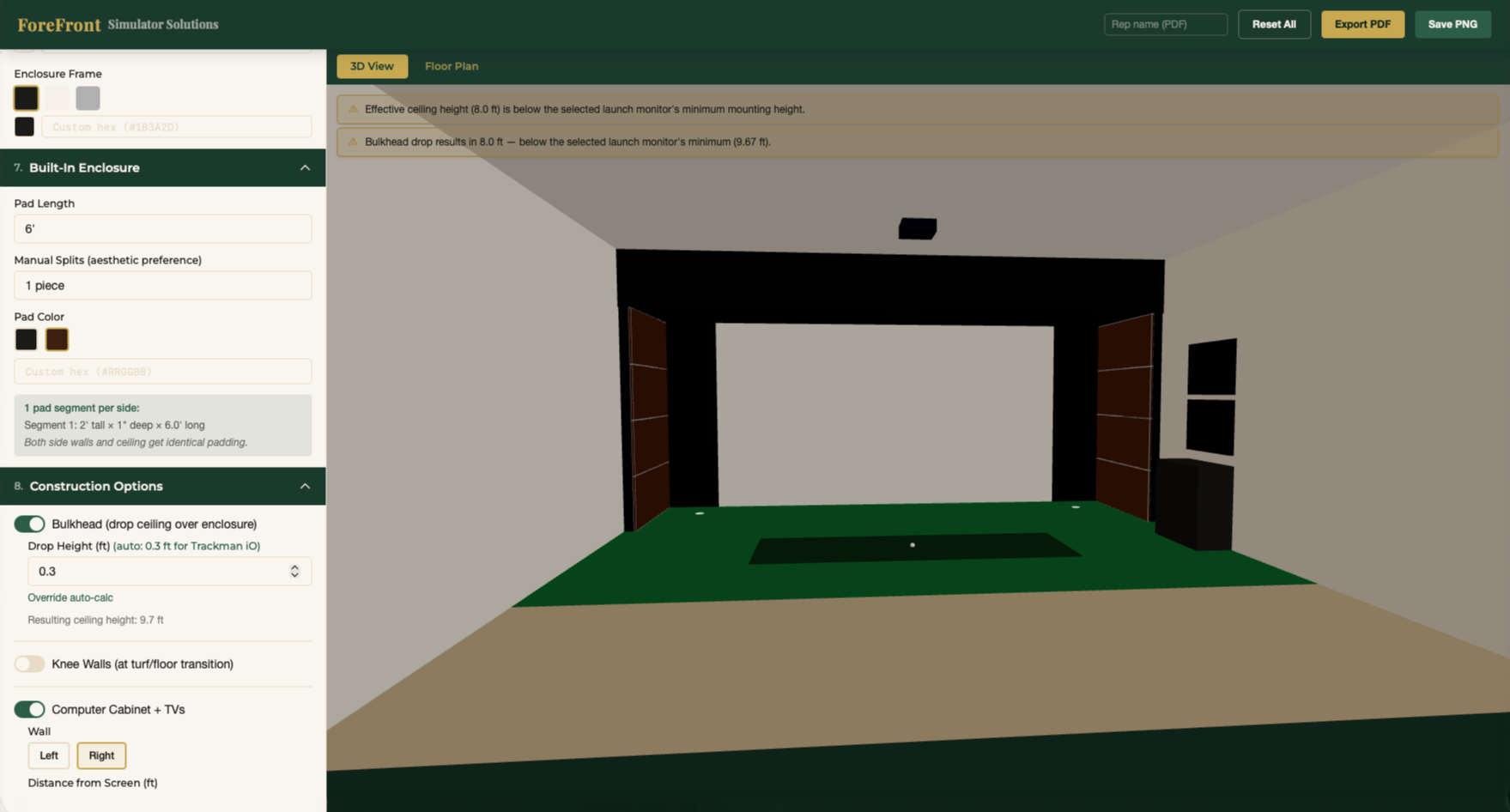
- ForeFront creates 3D renderings for every project, residential on up, so buyers of a $70,000 to $100,000 project can see exactly what they are getting.
- A proposal should state in writing whether the architect, GC, engineer, ForeFront, or The Club Partners owns each task, and should include overhead, side, and electrical layouts showing outlet locations, amperage, dedicated circuits, low voltage, and conduit.
- Because technology vendors may take one to two days to schedule service, ForeFront offers service plans, and Corey Ferger calls a partner who can get a simulator running within five minutes critical.
What construction details matter most in a club simulator room?
Cliff Stevens: It’s a very similar answer to what we would say for a higher end commercial facility, one of these bar lounges you’re going to open. You’ve got to think more about things like durability and safety. We’re going to consider materials that are much easier to maintain. They potentially last longer. They’re easier to change out when they do wear out. There’s a durability and maintenance aspect in a commercial country club setting, and we need to plan for all of that.
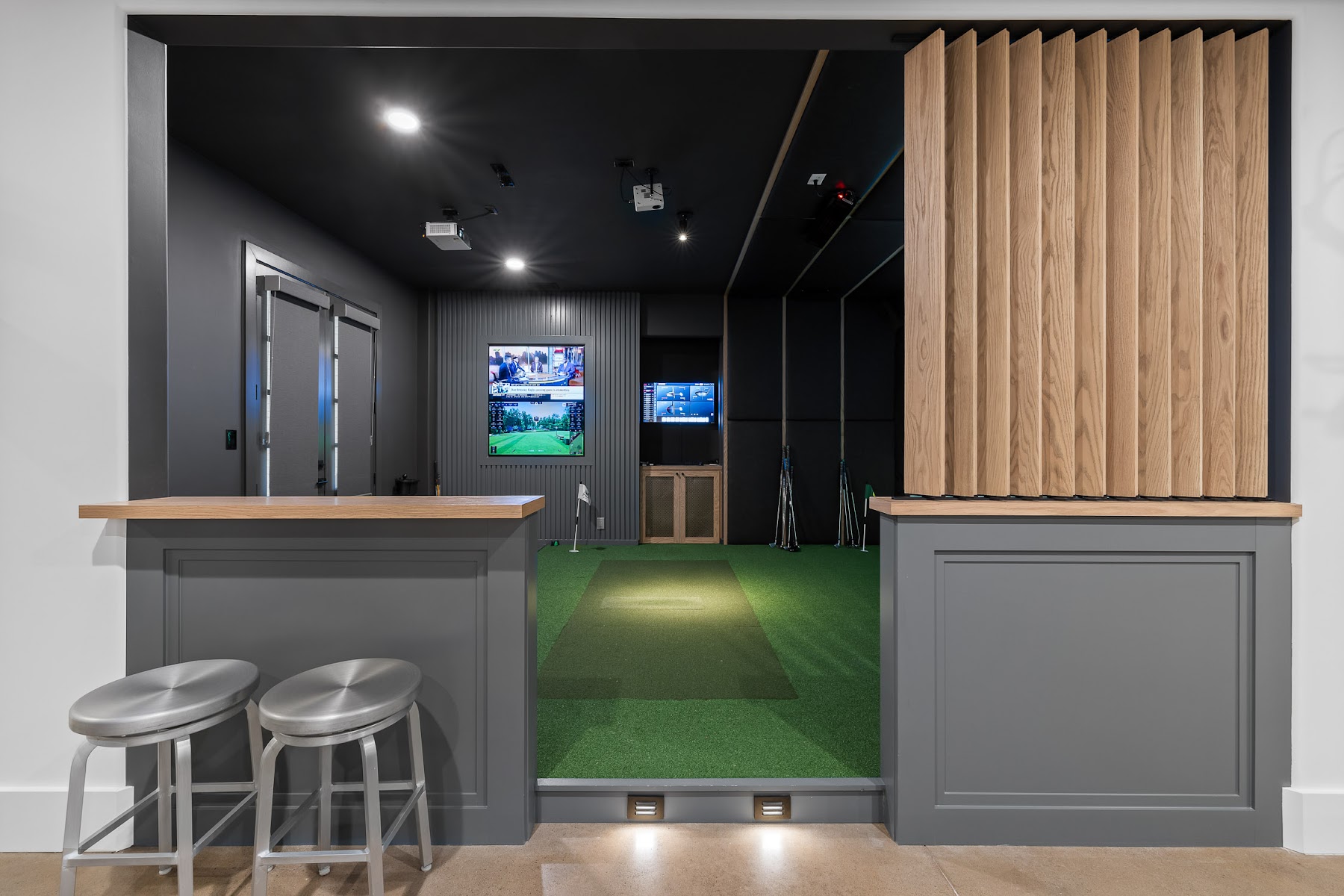
Are we going to be running beer tap lines into the room so it’s available? How do we design the room in a way that it’s easy for the wait staff or the support staff to be there to support it? Do we have cameras monitoring to see if something’s going wrong? We have alerting in our system so that we could notify people if the bay is not working or there’s a problem. All of that is stuff that you wouldn’t really think of in a residential setting.
You’re going to want more space for people to congregate around the simulator while it’s being used. You’re going to have to think about, do we have a check-in space and a waiting area for people to hang out when they’re waiting to use the environment?
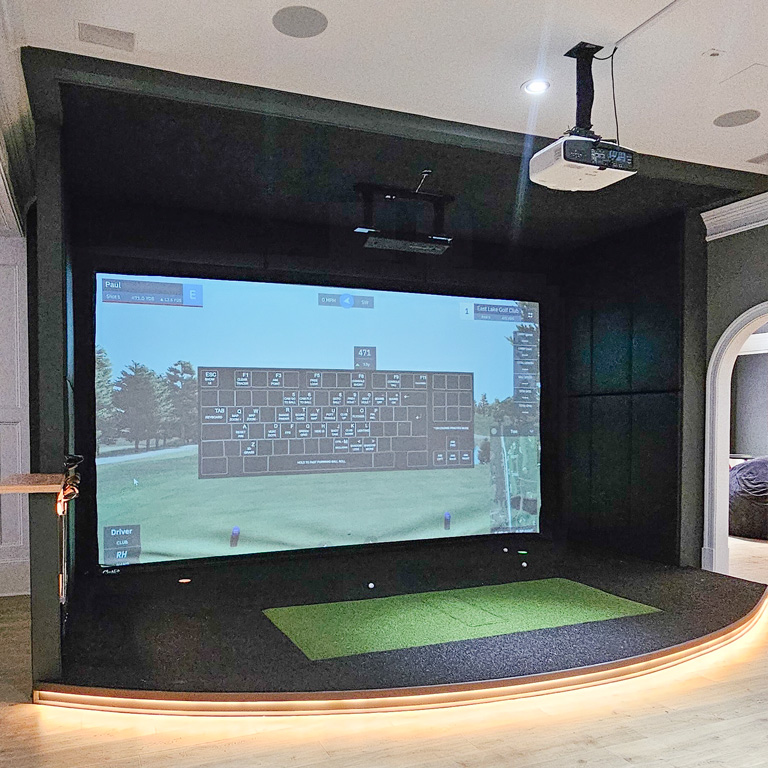
Especially in these higher end country club settings, you’re probably going to be considering higher end materials. It’s not just going to be a golf simulator with some putting turf. You’re going to want to think about embroidering the country club’s logo into the pads. We can do custom putting turf with the logo on the putting turf, or a putting carpet concept. Do we do the pads in the colors of the country club but keep it classy? All those things start to become way more important in these settings because the member’s going to expect it in a high end country club. If we put a C-rated golf simulator in an A-plus country club, you’re bringing down the entire experience overall, and your members are not going to enjoy it like they would if you met the standard of the club.
What should a turnkey simulator proposal for a private club include?
Corey Ferger: A lot of the value in a turnkey solution is you’re not adding more things onto the plate of the GM or the COO or the director of golf or whoever’s taking ownership of this project. At the end of the day, there shouldn’t be more work for you. Yes, we need you to check off a few things, sign off on it, give some input early on. But turnkey means you set the direction and the expectation. We’ll get you to sign off on a few other things. And then from there, we do the heavy lifting.
We flip the switches on, do some training, make sure your staff is in a position to coach and teach the membership how to use it, and that should be it. This should not be a project that you look at and you go, I’ve got 40 things on my to do list. How am I going to get this done too? That’s the whole value of using professionals and people who spend all day every day dealing in the space, letting them handle the project and let you look like a rock star.
Cliff Stevens: Train your staff on how to use it, supporting you, making sure if something happens and it’s not working, you get service right away. We have service plans that help achieve that. A lot of these technology vendors are great, but they don’t always pick up the 1-800 number on the first ring. They might schedule an appointment with you two days from now or a day from now. If you’ve got a member tournament on your simulators or it’s how your members are warming up before a big tournament outside, you need to fix that. The ease of the implementation is important.
For a $70,000 or $90,000 project or a $100,000 project, you should have a detailed image of what you’re about to get. We create 3D renderings for every project, residential on up. Sometimes we’ll lose out to a lower price bid, and I’ll say, do you have an image of what you’re getting? Do you know what they’re building for you? Because you can write some pretty vague words on a proposal.
You should have a crystal clear picture not only of what you’re getting, but who’s doing what. We spend an awful lot of time, and there’s a couple members of my team that are amazing at this, mapping out who owns what. Does the architect own it? Does the GC own it? Does the engineer own it? Does ForeFront own it? Does The Club Partners own it? You need that accountability and ownership of who’s doing what, because you get into a project like this and an expensive implementation piece comes up and you get a lot of finger pointing. The GC says the golf simulator company owns it, we say they own it, but we put all that on paper and make it super clear. That way, there’s no confusion when push comes to shove.
Even things like electrical diagrams. We publish an overhead view, a side view, very clear electrical layouts: if your electrician’s going to be doing the work, where the outlets need to go, how many amps each outlet is, is it a dedicated circuit, where the low voltage is, where your conduits go. You should have that clear picture from your vendor partner. And if you don’t, you’re not getting the service you deserve for the amount of money you’re spending.
Corey Ferger: As we’re talking about turnkey, it’s important to understand that members, when things go wrong and they come to the golf staff or whoever’s owning this space, they’re expecting answers usually pretty quickly. As a member of a couple private clubs, we typically are a rather impatient bunch. Being able to have access to someone who is going to pick up the phone when you call in a panic is important.
When things go wrong, and it’s never if, it’s when: who’s going to pick up that phone? How quickly are they going to pick up the phone? And how quickly are they capable of getting it resolved? That’s where ForeFront and The Club Partners really thrive, the accessibility and the desire to make it right for club leadership, because we know what it’s like for you standing there as a director of golf going, I don’t know. Everyone wants to have a guy for everything, but having a guy who can get the simulator up and running within five minutes is critical.
Frequently Asked Questions
How is a country club simulator room built differently from a home simulator?
Cliff Stevens says a club room calls for more attention to durability and safety, with materials that are easier to maintain, last longer, and are easy to replace. It also needs things a home rarely does, such as camera monitoring, alerts when a bay stops working, access for wait staff, and a check-in and waiting area.
Can a simulator room carry the club’s branding?
Yes. Stevens describes embroidering the club logo into the pads, custom putting turf with the logo, and pads in the club’s colors, while keeping the look classy so the room meets the standard of the rest of the club.
What documents should a club expect in a simulator proposal?
Stevens says a club should see a detailed image of the finished room, and ForeFront creates 3D renderings for every project. The proposal should also map which party owns each task and include overhead, side, and electrical layouts covering outlets, amperage, dedicated circuits, low voltage, and conduit.
Why does service support matter for a club simulator?
Technology vendors may take a day or two to schedule an appointment, which is a problem during a member tournament or before a big outdoor event. Corey Ferger notes that club members expect quick answers, so having someone who can get a simulator running within five minutes is critical.
Edited for length and clarity from a recorded conversation with Cliff Stevens and Corey Ferger.