TL;DR
Cliff Stevens, founder of ForeFront Simulator Solutions, and Corey Ferger, CEO and founder of The Club Partners, explain how simulators turn golf into a twelve-month club activity. Clubs can run league nights from 7 to 11 PM, host virtual matches against clubs overseas, and move lessons and fittings indoors. Ferger notes that a fitting that cuts driver spin and adds 15 yards can end in a $700 purchase before the member leaves the property.
- Simulators keep golf available twelve months a year, whether a Midwest club has two feet of snow or a Southeast club is facing 110 degrees and 100% humidity.
- Winter daylight can end outdoor play at 5:30 or 6 PM, while a simulator league night can run from 7 to 11 PM with food and beverage sales.
- Clubs can hold simulator tournaments against clubs on the other side of the world, including Ryder Cup-style formats played virtually.
- When a pro sees a member spinning a driver at 4,000 RPM, a refit that tightens dispersion and adds 15 yards can become a $700 sale on the spot.
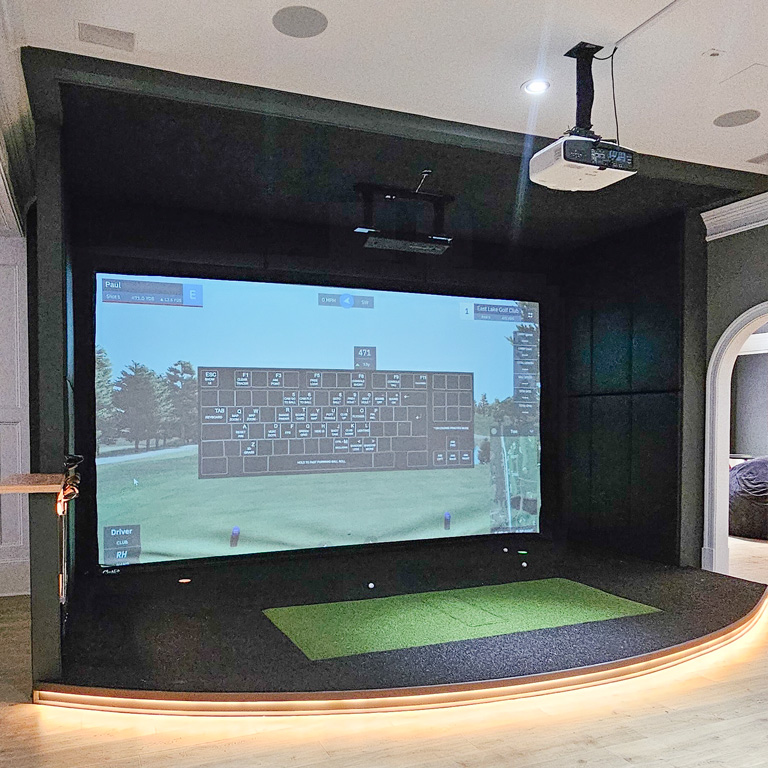
- A dedicated indoor studio keeps launch monitors, club heads, shafts, and swing cameras configured in one place, with each member’s lesson history tracked on screen.
- Real-time data can show a result a golfer would not otherwise believe, such as spin rising from about 2,500 to almost 7,000 RPM on a slower, longer swing.
How do simulators make golf a year-round club activity?
Corey Ferger: Golf becomes a year-round activity with the use of simulators and that sort of technology. If you’re in the Midwest, golf is twelve months out of the year even when there’s two feet of snow on the ground. And if you’re down here in the Southeast where I’m based out of, you’re not running indoors and away from golf when it’s 110 degrees with 100% humidity.
This gives that opportunity to continue to enjoy a hobby, a leisure activity, a sport, a networking activity, in the comfort of air conditioning. An outdoor sport becomes accessible any time of any day of the week, any week out of the year.
Cliff Stevens: In the winter, you can only golf till 5:30 or 6 in certain geographies. Well, we can host league night from 7 to 11 PM, and we’re selling beer to a whole bunch of guys and girls, and they’re playing on league night on simulators. It’s opening up your hours of operation, opening up the windows across the year that you could play.
How can clubs run leagues and tournaments on simulators?
Cliff Stevens: There’s some ways clubs can use it: league play, tournaments. You can now have sim golf tournaments with a competition from your country club versus a country club on the other side of the world.
I had lunch with a guy recently. Their country club here in Roswell, Georgia has an annual cup, like a Ryder Cup format, where they go to Scotland, and then the Scotland guys come here. You could do that virtually. It’s opening up so many avenues for different types of golf that you could play in competitive formats.
How do simulators support club lessons and fittings?
Cliff Stevens: It’s opening up all sorts of possibilities: doing lessons indoors, training, doing club fittings. Not only are those experiences, but those are additional revenue streams that you can start to bring to your members. It opens up a whole world of other types of programs and revenue that a club can run with its members, and you’re not dependent on good weather.
It could be the whole basis of your instruction program, lesson program, and club fitting program. Even here in Atlanta, where we can play 250 to 300 days out of the year, there’s still a bunch of those days I don’t want to go outside and take a lesson. You’re relying on the weather. I tried to take a lesson a few weeks ago, and there were thunderstorms, and we had to cancel.
It can really support it in a way that makes it really consistent. It’s super comfortable for the instructors. They have all their equipment there. At my club, you see instructors dragging launch monitor equipment, all the shafts and the club heads, out to the range to do fittings.
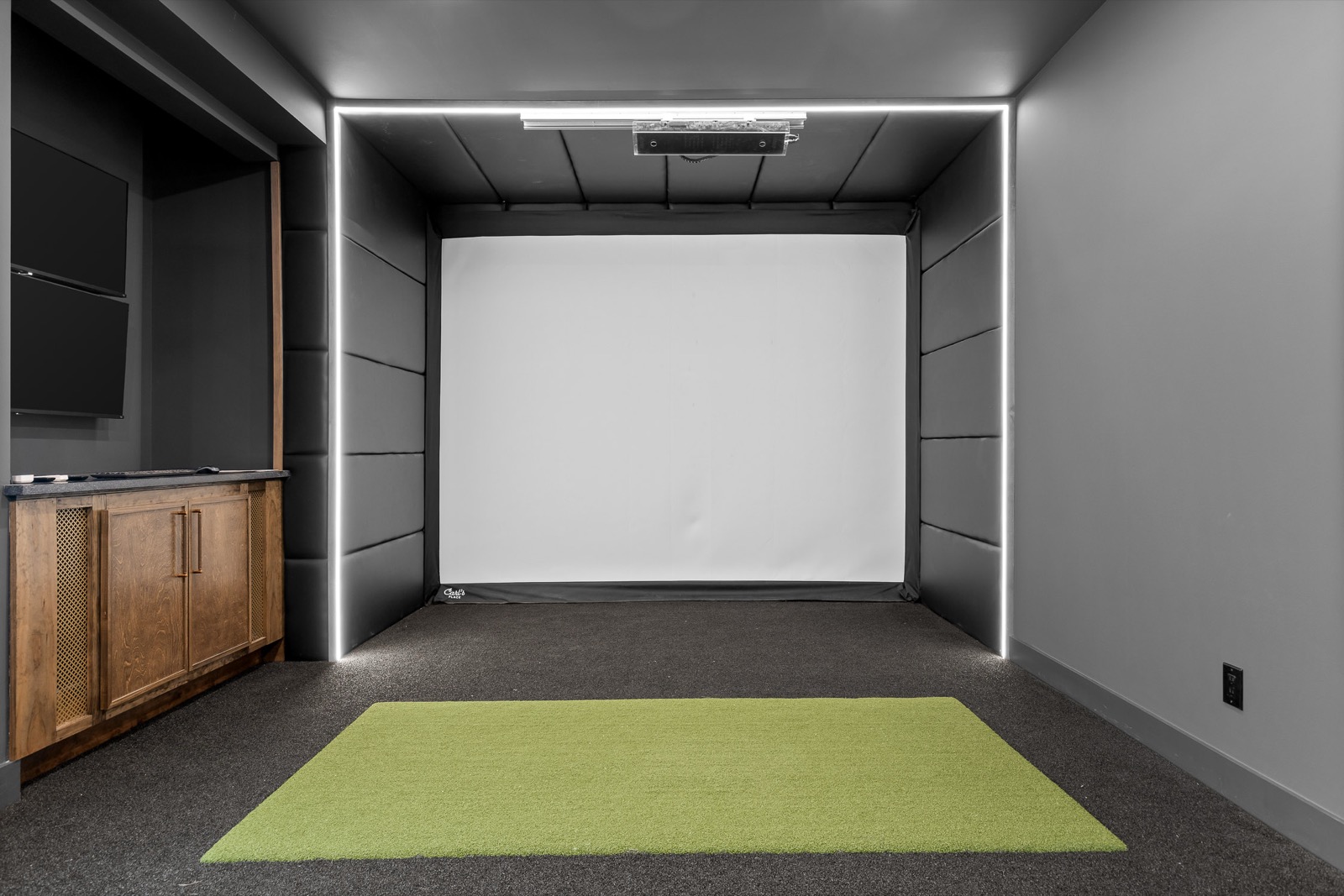
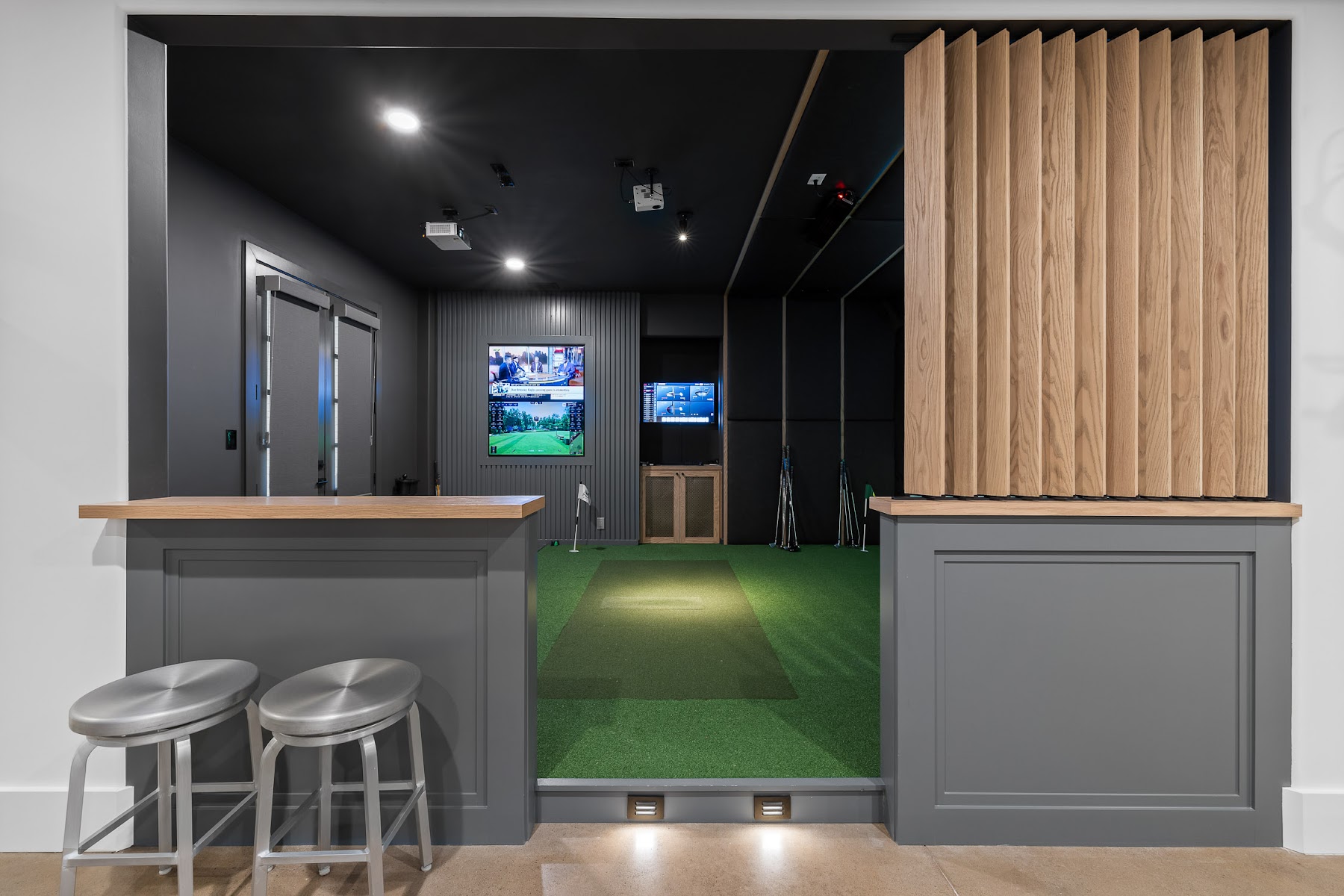
You build a great fitting and instruction studio. You’ve got all your clubs mounted on the wall, the shafts mounted on the wall. They’re organized nicely. You have all your data right there on the screens. You can track the member’s history of their different lessons. It can completely alter how you manage your lessons and your club fittings: better organized, more comfortable, more consistent, not relying on the weather.
Your equipment stays in the same location. It’s always configured. It’s always ready. You’re going to have swing cameras preconfigured and ready to watch the swing in slow motion. My instructor is back behind me with his iPhone showing me videos. Adding that on creates a whole better experience and better outcome.
Can simulator fittings drive equipment sales at a club?
Corey Ferger: The opportunity to be able to sell equipment, being able to have access to immediate data. I’m always on the search for something that’s going to make me better and make my game better.
The director of golf, the fitting instructor, the assistant pro sees that I am spinning a driver at 4,000 RPM. The easiest sale they’re ever going to make is to go grab a driver, set it to the settings, put the shaft in there that they think is going to be best for me, and hand it to me. The minute that spin comes down and that dispersion gets tighter and I’m hitting it 15 yards further, that’s a $700 purchase that is happening before I leave the property. There’s a true ROI story to be told there just off of equipment sales in a lot of these club settings.
How does real-time simulator data change golf instruction?
Corey Ferger: The gentleman I work with has the incredibly difficult task of making me better at golf. Not because he’s not capable of doing it, but I’m too stubborn to do what he was asking of me. What’s beautiful is the data is available in real time.
For a large part of the early part of my golf days, coaching was vibe coaching. Maybe try this and let’s see what happens. Did that work? You’re just looking at the ball: oh, yeah, I think that worked. But we don’t really know why it worked or how it worked. Now, with the data available with these simulators, you can look at it in real time.
I’m really good around the greens with the low checking bump and run shots: putting the ball back in the stance, letting it grab, and then coming to a more gradual stop. I’ve been struggling with the higher floaty flop shot. My instructor says to me, let’s try to hit this thing 15 yards, but make the longest, slowest swings possible. I’ve always been told more speed, more spin. This doesn’t make any sense to me.
So I make this long, languid, slow swing. The ball goes 18, 19 yards and the spin rate almost triples. I go, that makes no sense to me. Well, he explains the ball stays on the face longer, but we could see it in real time. If it wasn’t for the data on the wall, there’s no way I would have believed that. I could see the RPMs go up to almost 7,000 from the 2,500 that I was getting trying to open the face and swing faster.
In a controlled setting where we’re comfortable, I’m not sweating. You’re not fatigued as quickly. You can get more out of the practice session. I am no longer capable of standing outside in 100-degree heat, hitting 45 drivers on a driving range, hoping we figure it out. I can do that with eight swings in an air-conditioned setting with the data on the wall. Let’s do that, and let’s get a cocktail sooner, and get some lunch.
You get better use of that time as well. There’s only so many bullets in the chamber, if you will, when it comes to swings for me. If you crank up the heat and the humidity, those numbers go down even more. We’re going to get more out of that hour of practice time in an indoor, air-conditioned, controlled setting than we are watching me drip and sweat and melt away on the driving range.
Frequently Asked Questions
Can a private club run golf leagues on simulators in winter?
Yes. Cliff Stevens notes that winter daylight can end outdoor play around 5:30 or 6 PM in some regions, while a club can host a simulator league night from 7 to 11 PM. That extends the club’s hours of operation and adds food and beverage sales.
Can club members compete against other clubs on a simulator?
Yes. Stevens describes sim golf tournaments against clubs on the other side of the world. He gives the example of a Roswell, Georgia club whose annual Ryder Cup-style cup with a Scottish club could be played virtually.
How do simulators help club pros sell equipment?
Immediate data shows the problem and the fix. Corey Ferger explains that if a pro sees a member spinning a driver at 4,000 RPM and refits them into tighter dispersion and 15 more yards, that becomes a $700 purchase before the member leaves the property.
Why move club lessons and fittings indoors?
An indoor studio removes weather cancellations and keeps launch monitors, clubs, shafts, and swing cameras configured and ready. Instructors can track each member’s lesson history on screen instead of hauling equipment out to the range.
Is indoor simulator practice more efficient than the range in hot weather?
Ferger says heat and humidity reduce how many quality swings a golfer has, so an air-conditioned session gets more out of an hour. He describes working through a problem in eight swings with data on the wall instead of 45 drivers outdoors.
Edited for length and clarity from a recorded conversation with Corey Ferger and Cliff Stevens.