TL;DR
Installing a premium golf simulator, whether for a private residence or a commercial venture, involves far more than simply mounting a screen. A truly exceptional space begins with meticulous planning, particularly concerning electrical layouts. Expert design-build teams provide comprehensive electrical diagrams, ensuring all components are correctly powered and positioned for optimal performance and safety. Beyond the technical, the overall flow and comfort of the space are paramount. For commercial golf simulator installations, this extends to ADA compliance and
Golf, Making, and Space
Cliff: The construction requirements, one of the biggest things, is space, obviously. You wanna make sure that you have enough space. But, also, with all the components, you wanna make sure that the electrical is in the correct space, where it needs to go., if you work with somebody like us, we provide a full if we’re not doing the build out ourselves as far as the, natural GC work, then we provide full electrical diagrams for the owner, and just make that process a lot easier. And then, typically, you have framing to consider, making sure you get those partition walls, how you want those if you want them fully enclosed.
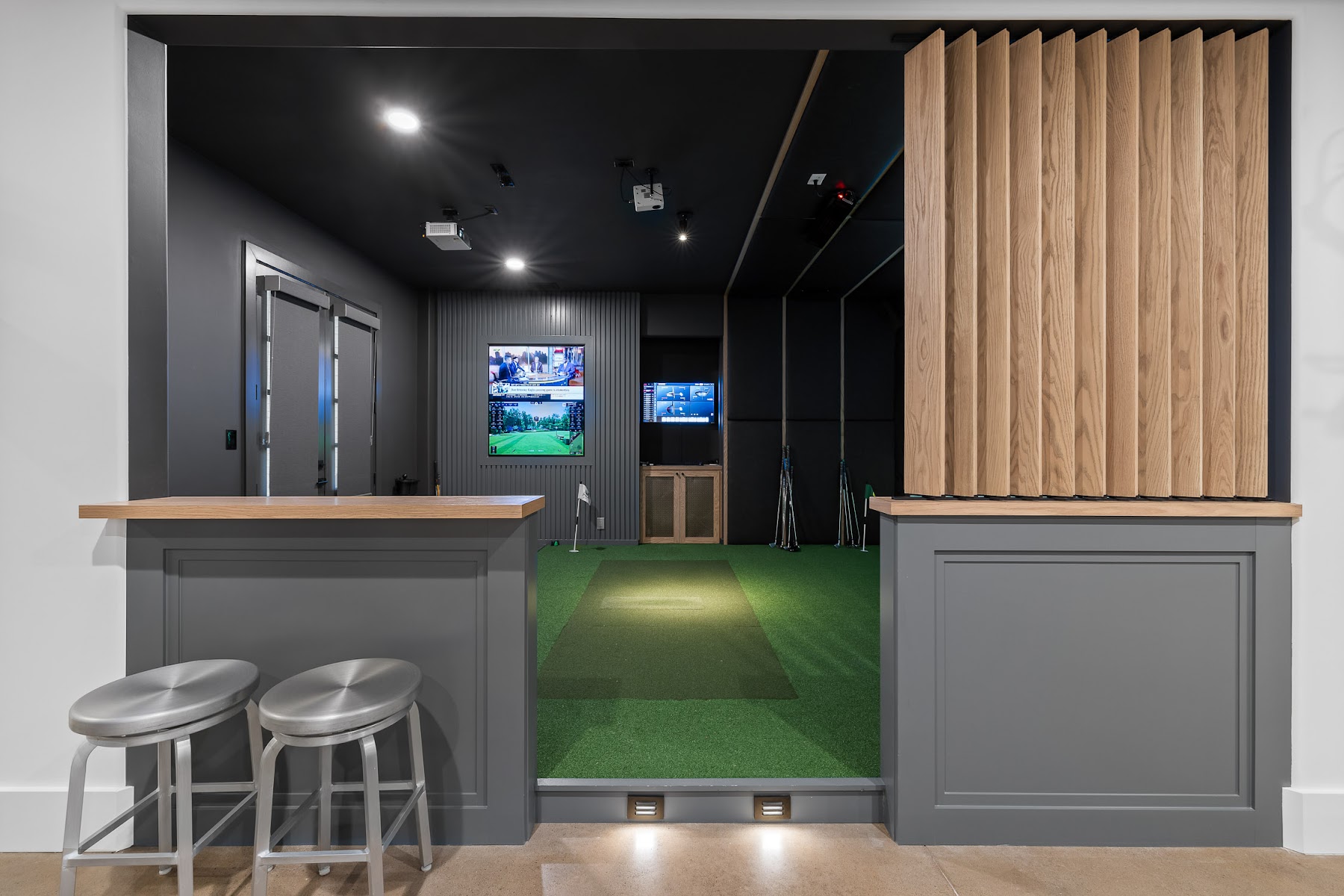
Cliff: We do a lot of angled, partition walls just to so it doesn’t feel super closed off when you come in. We don’t we usually don’t get a, a massive five to 8,000 square foot facility like, everyone would dream about. We’re usually dealing with about 2,000 square feet and putting three golf sims in there. In order to keep that from feeling super crammed, we design these angle walls, keep the line sight nice and open. But, really, when it comes to the simulator, I would say the framing and electrical are two major con construction components to make sure, that you could fit it within your space. Tyler?
Tyler: Yeah. Those are pretty massive. And, Cody alluded to a bit, just the overall spacing and flow and making sure that people can be comfortable inside of that space and the construction requirements are addressing that., there are also other considerations when we get into the commercial space with ADA compliance and some of those factors as well too. There’s a lot that goes into it. And, again, if you work with somebody who’s experienced in this design build space, for golf simulators, we can help you think through, quite a quite a few of those upfront considerations, and even everything from, some of the networking and other pieces you need to own and operate the business., we can help you make those considerations and then work with your own GC can implement those with the appropriate trades.
Stephen: Nice. Going on to the next question here. What does a professional golf simulator installer handle beyond just the launch monitor and the screen?
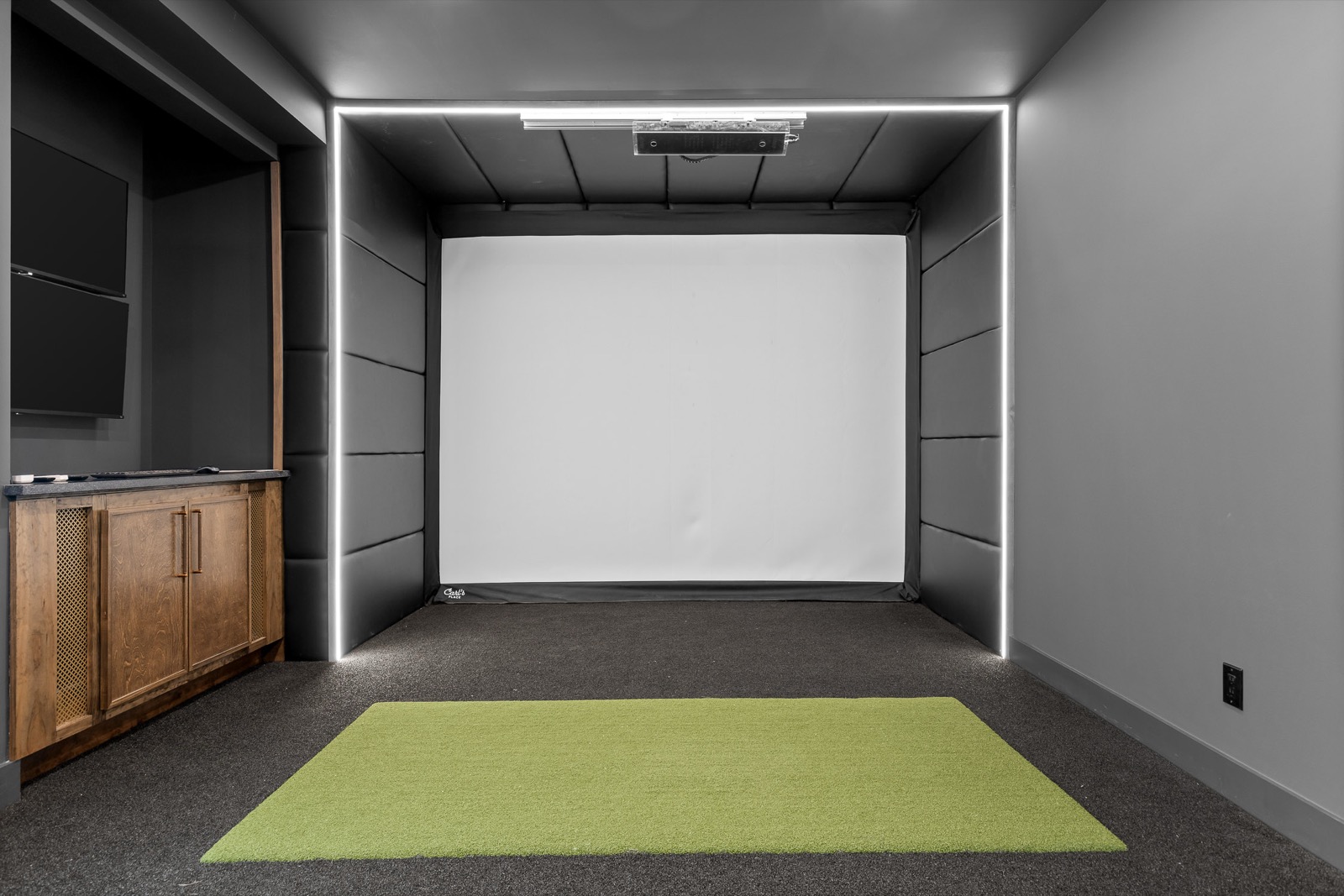
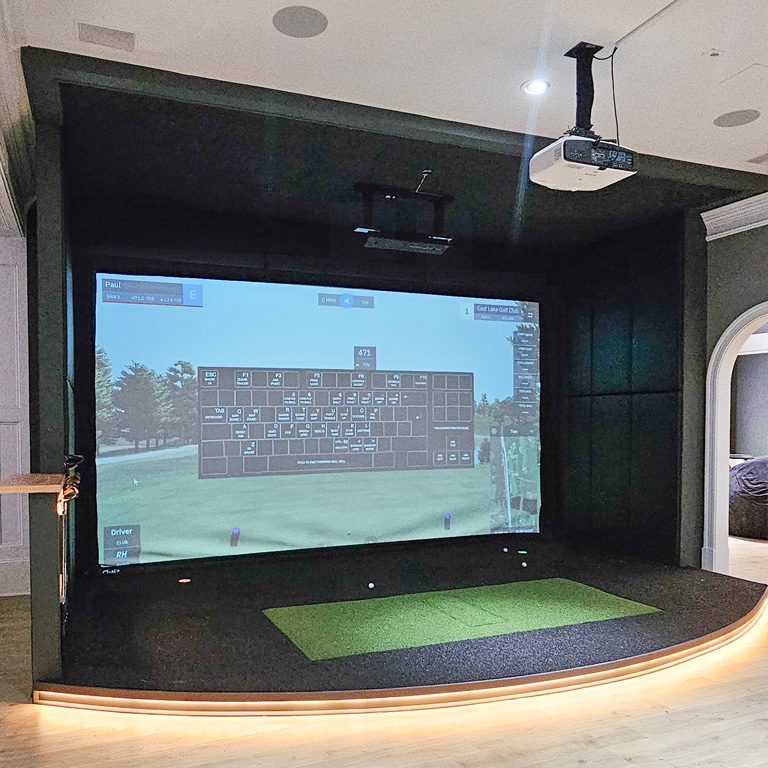
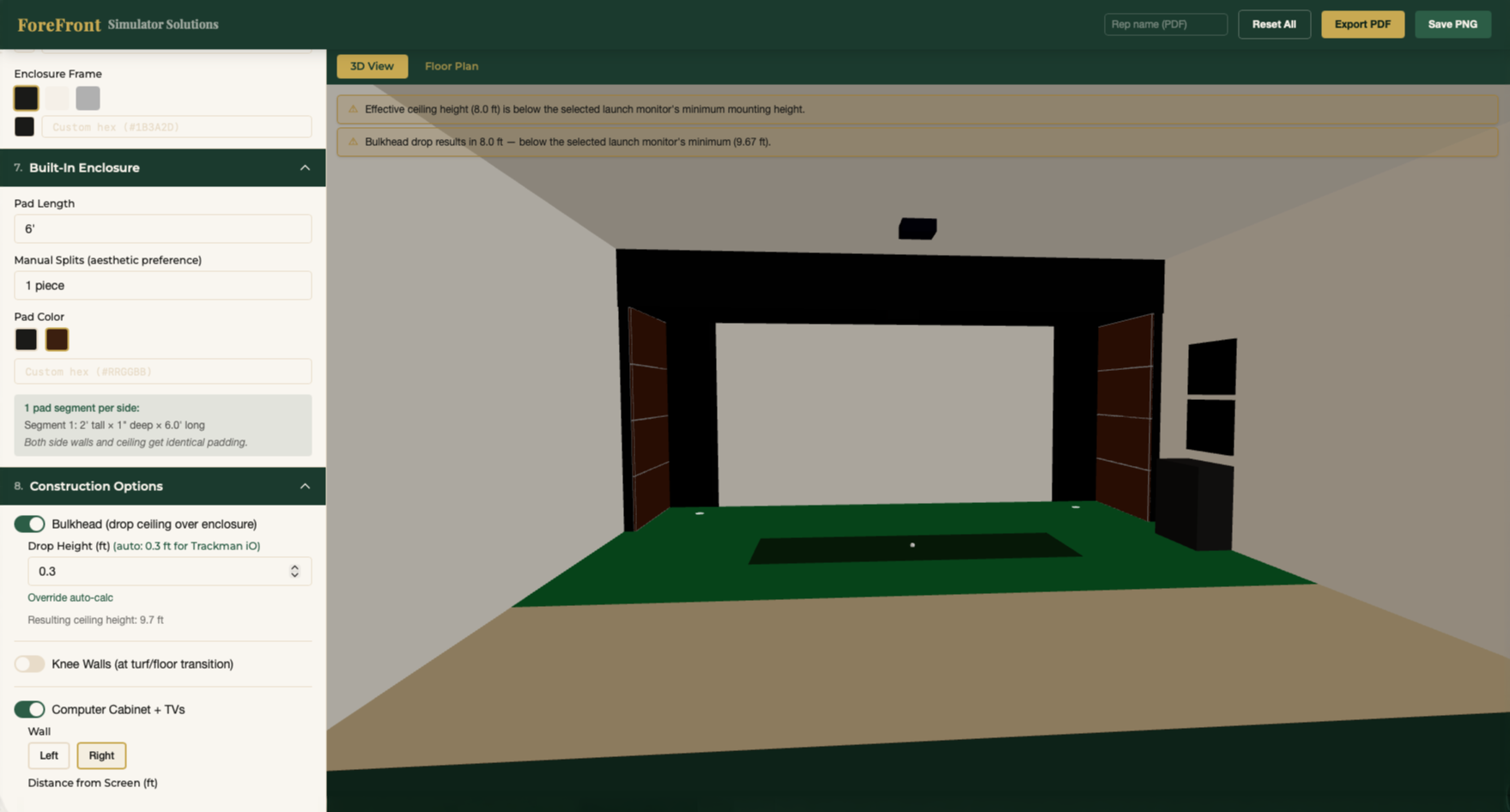
Cliff: The one thing that we pride ourselves on in any, good installation company should is the overall fit and finish. The and one major factor that takes it from a DIY to a, a commercial super nice quality product would be the ceiling and wall protection. Mhmm. Making sure that’s done really well. And we’ve talked about, the importance of making sure we’re not destroying sheetrock with shank golfers. And so, the fit and finish of the ceiling and wall protection, we include LEDs in our in our golf sims. But then you have the turf, the hitting mat, making sure those interact together and, they’re they’re either completely recessed or pretty much flushed to where there’s no tripping hazard, hooking up all the electrical components and making sure that they’re in working condition. One thing a lot of people don’t consider is we’re super intentional on, the screen size and filling the whole screen with a projected image.
Cliff: A lot of that, there’s a lot of ratios and, formulas that come in to making sure the projector’s set at the right, depth from the screen.
And all those little minor details come together to create this overall, really nice type product. And we also do the tech setup as well. Our guys are, they’re well versed in hanging screens, but they’re also well versed in installing all the software, the technology, making sure that they can take a golf club and swing into it. And, the launch monitor is doing its job. The projector is doing its job. The computer is doing its job, and all of the information is correctly relayed on the TVs., our installers are pretty all encompassing from a skill set of, ranging from, framing, hanging a screen, installing software. It really varies.
Tyler: Yeah. And Cody was getting to but just, the overall calibration and setup, making sure you’re getting as much accuracy as possible out of your launch monitor because we’ve got all the right specs and distances in place. The projector’s a big one., I I hate going into a facility where the whole screen isn’t filled by the by the projection for coming out from the projector. And then the dumping black bars above and below.
Cliff: Exactly. It’s that’s that’s the worst.
Tyler: We’re we’re we’re always very focused on making sure we fill the screen and we size the screens appropriately. But then there’s also just the overall handoff back to the owner. Making sure, a lot of these owners, they come from all very maturities of some golf experience and golf simulator experience, but especially folks who love golf, play golf, they wanna do a simulator business, but they haven’t really worked with simulator software., we go through a whole handoff and training process, so they’re aware of how to, how to operate all the systems, or maybe they’ve used a different launch monitor or a different brand versus what they’re putting in their facility, so they need to get up to speed.
Tyler: Yeah. Yeah. With anybody who’s considering themselves a professional, doing that hand off, having some support after the fact. And, one of the things that we do is also offer ongoing support and maintenance plans for commercial facilities because, some aspects of your simulator are consumable, especially if you’ve got people hitting in it all day long., making sure you’ve got that ongoing support option., again, if I’m if I’m thinking of somebody who’s doing this professionally being able to provide that, for a commercial simulator owner.
Stephen: Yeah. It even just keeps on coming back to that peace of mind and, and attention to detail that obviously shows that you guys have. Yeah. With that, we’ve gone through a lot of details of this already. But what do you guys think are some of the biggest mistakes that businesses make when building a golf simulator room?
Cliff: I would say there’s there’s two major mistakes that I’ve seen, and that we try to consult with new clients about. Number one is technology. Mhmm. You have to consider, yes, there’s gonna be people coming in just to hit some golf balls, but a lot of these people that are gonna take time out of their day to go hit golf balls in an indoor facility are gonna be, golfers. They’re gonna be very golf centric people who wanna go in there and learn more about their swing, learn more about the data analytics on the ball, and all those factors.
Making sure that you choose the right technology that, that creates the best overall indoor golf experience you can. Because the last thing you wanna go do is spend, 50 to $75 an hour, and it’s just crap technology that you don’t get a lot out of or it just feels super gimmicky.
Cliff: And mistake number two that I see, which I think is probably ultimately one of the largest ones, is creating an environment, not just throwing up some golf sims in a commercial space, but creating almost like that country club experience to where people wanna go and hang out and wanna be there. The more time that they spend there, the more money you make, obviously. But creating that, that homey feel, holding leagues, Branding is wildly important. Creating that really cool brand which you can sell merch off of, but also make people feel like they’re part of something bigger than just, going to talk golf and hitting balls Yeah. Which there’s I love doing that still to this day. But when I, we go to some of our facilities, and we play in the leagues and support the owners.
Cliff: And, when I’m there on those league nights, it’s just really cool to be in that environment and be with those guys. And so I feel like owners that are super successful in the industry create a really good brand and experience, and create that overall professional, environment to where it doesn’t feel like you just DIYed three sim bays and threw them up, three enclosures. I think those are my biggest too. Tyler, what do you think?
Tyler: Yeah. I those would be the biggest ones, especially what you mentioned., there’s this concept of, third place. It’s, it’s a place you wanna go. It’s a community experience., having that as something that owners are thinking about from the start, not as an afterthought, is pretty key for just their overall business success. The technology part plays a huge part of it. Right? If I can go somewhere where I’ve got access to swing cameras and I can do some of the AI analysis on my swing or I’ve got slow motion impact cameras, that’s something you can’t necessarily get everywhere. Factoring some of those things into, what experience you wanna enable, and, also, what can you do for nongolfers? I know we’ve done plenty of multi sport simulator installations in addition to golf. It gives something for if you wanna have kids or the family come to these facilities and have something else to do that if maybe they’re not the best golfers, but they can still enjoy the space and pay for the time to leverage the base.
Tyler: That’s a key piece. The third one is maybe just overall, not accounting for the right space requirements., thinking about both managing for left and right hitters and making it comfortable for swinging and also safe for people. Again, in these ideas where maybe you have only a few staff members or maybe it’s an unmanaged twenty four seven type facility, how do you ensure that it’s it’s safe in those environments, the space has been accounted for so that you have less risk for injury or any insurance issues that you might run into. Indoor swing syndrome is a real thing.
Comparison at a glance
| Factor | Equipment Package Only | Turnkey Design-Build |
|---|---|---|
| Electrical planning | Owner responsible | Full electrical diagrams provided |
| Framing and partition walls | Owner sources separately | Included, including angled walls |
| Design customization | Standard package look | Custom millwork, padding, branding |
| Software and tech setup | Self-install | Installers configure and calibrate |
| Post-install training | None | Full handoff and training included |
| Ongoing maintenance | Owner sources | Support and maintenance plans available |