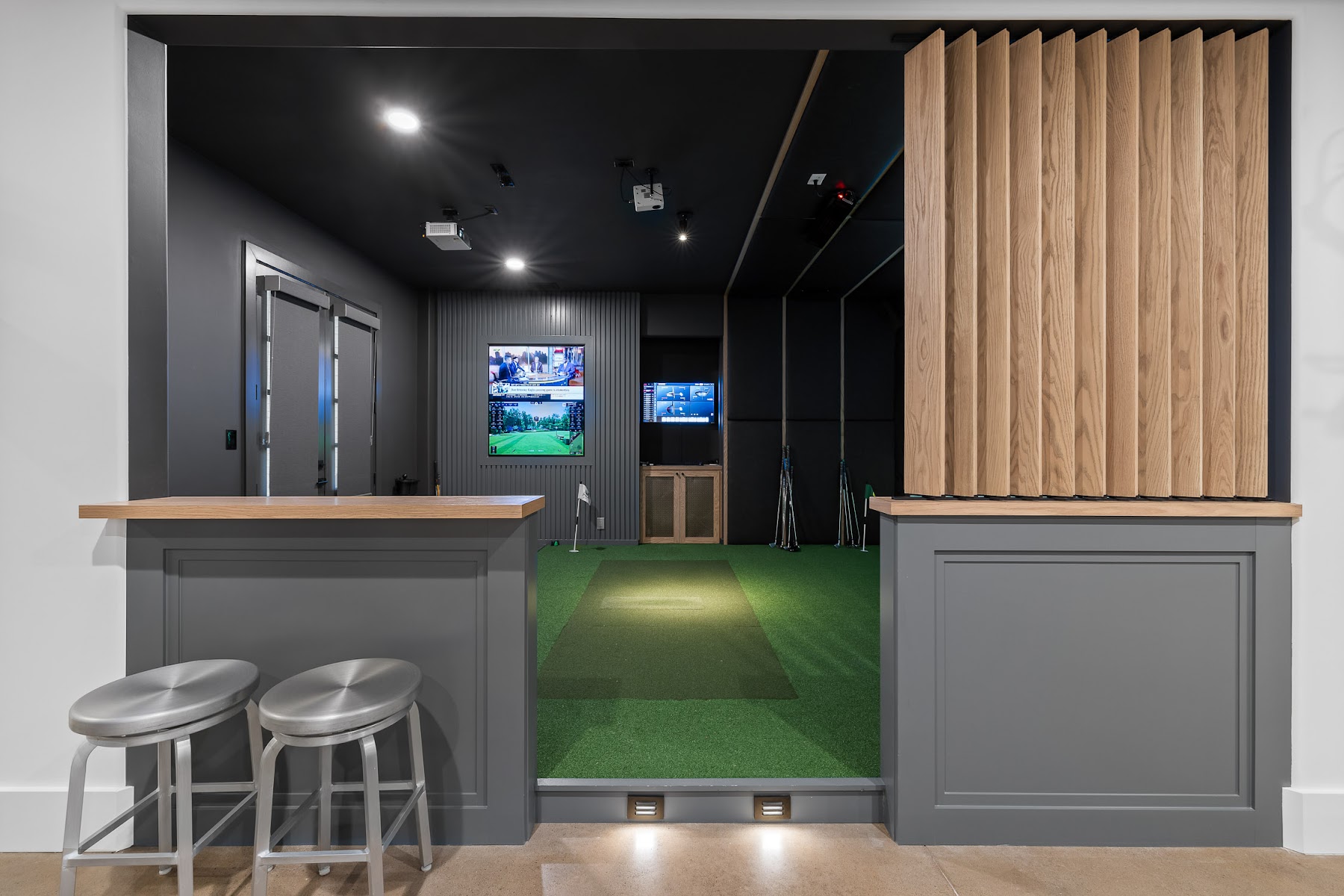
A professionally designed home golf simulator typically costs $50,000 to $100,000 for a turnkey residential installation. More elaborate projects—including detached golf sheds, additions, extensive construction, luxury finishes, or multiple simulation systems—can range from $100,000 to $200,000 or more.
That range is broad because a custom simulator is not just a launch monitor, projector, screen, and computer. It is a coordinated room where construction, technology, lighting, flooring, climate control, safety, acoustics, and interior finishes must work together.
ForeFront Simulator Solutions founder Cliff Stevens and technology specialist Tyler Brownfield explain that the right starting point is not a shopping list. It is the experience the homeowner wants to create.
Quick answer: What should you budget?
| Project type | Typical planning range | What it may include |
|---|---|---|
| Professional built-in home simulator | $50,000–$100,000 | Turnkey design, construction, technology, installation, calibration, flooring, protection, and finishes |
| Large high-end custom room | $100,000+ | Premium technology, architectural details, lounge or bar, raised putting, multisport features, and extensive remodeling |
| Detached golf shed or new structure | $100,000–$200,000+ | New structure, electrical, HVAC, foundation/site work, simulator system, and finished interior |
| DIY or basic training setup | Varies widely | Net or enclosure, portable launch monitor, display, and owner-managed installation |
These figures are planning ranges, not fixed quotes. Existing room conditions and the homeowner’s priorities determine the actual price.
The biggest home golf simulator cost drivers
1. Launch monitor and technology
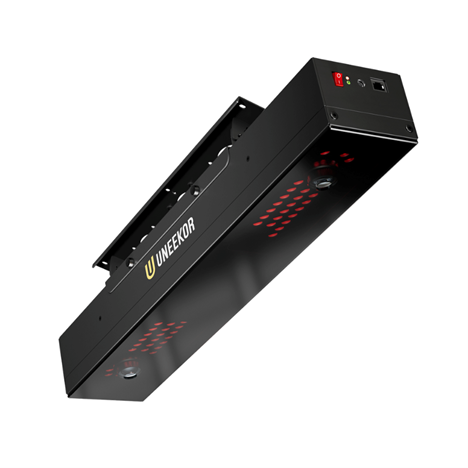
Technology can create one of the largest swings in the budget. Launch monitors range from entry-level portable products to professional ceiling-mounted systems costing tens of thousands of dollars.
The technology plan may also include:
- A 1080p or 4K projector.
- A gaming or simulation computer.
- Touchscreens and secondary televisions.
- High-speed swing cameras.
- Multisport, shooting, racing, or flight simulation.
- Audio, automation, networking, and control systems.
The key is choosing equipment as a system. Changing the projector can affect screen dimensions and mounting distance. Changing the launch monitor can alter the hitting position, lighting plan, or required ceiling structure. ForeFront’s installation process accounts for these dependencies before construction starts.
2. Finish level
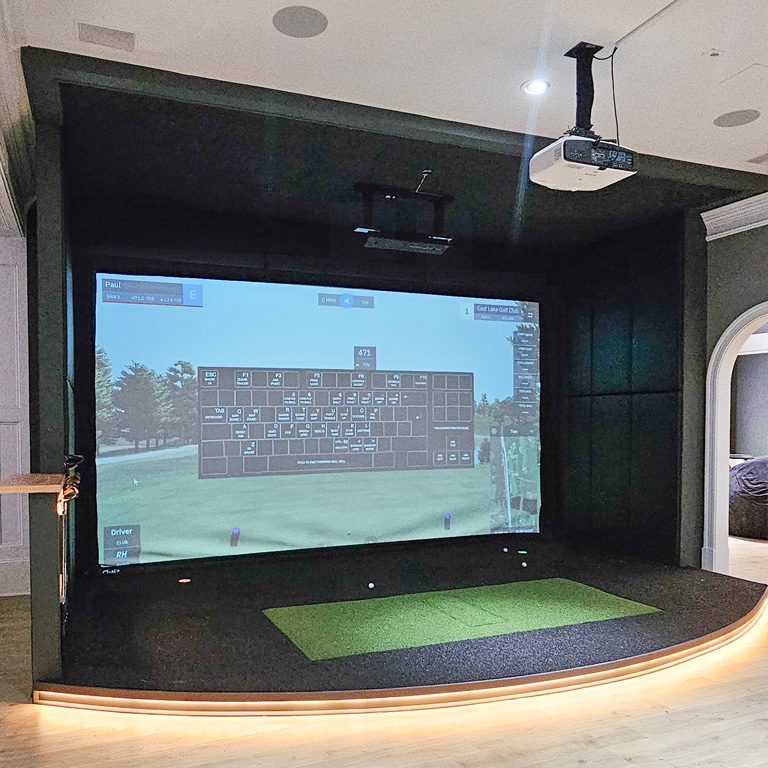
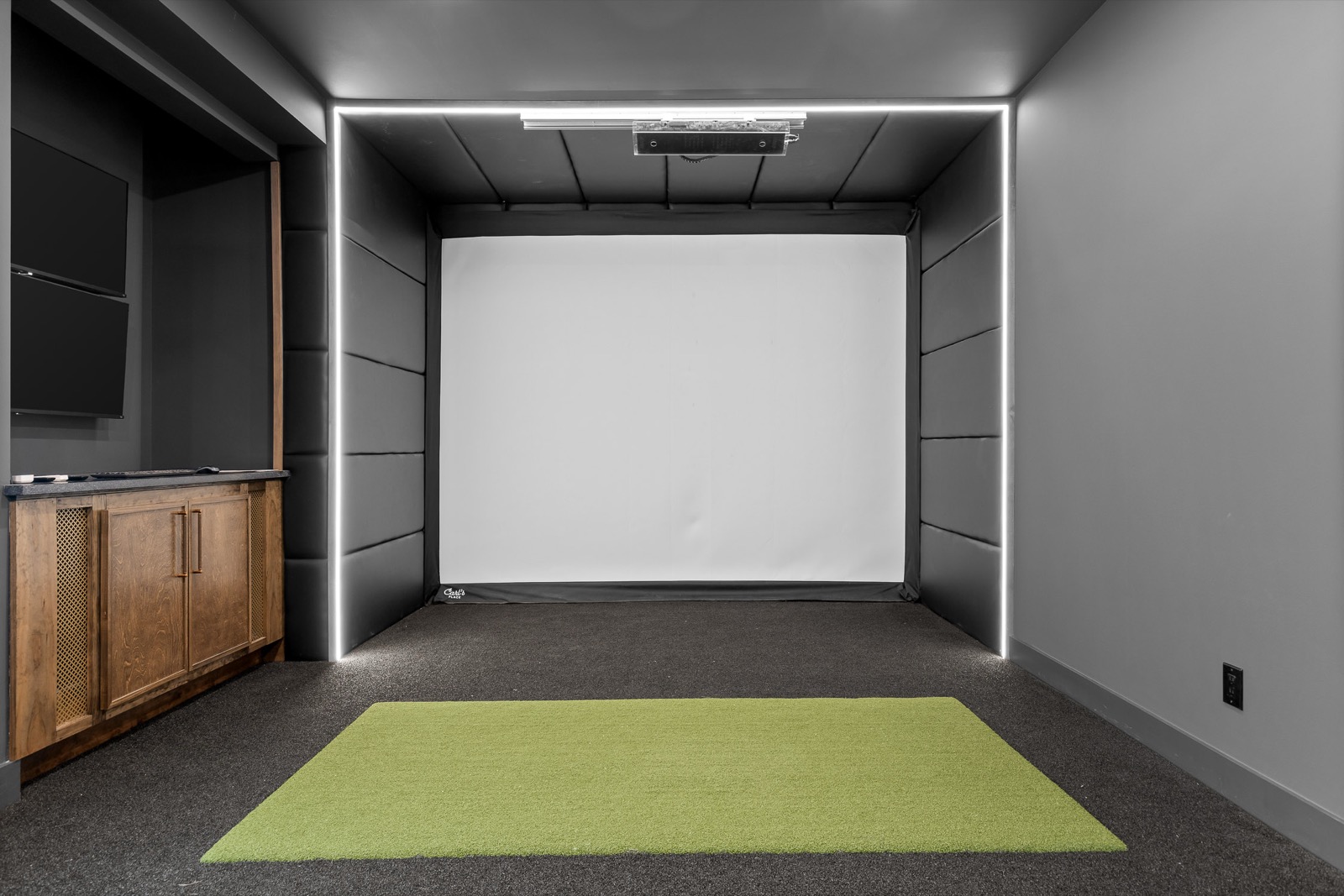
A functional simulator can be clean and simple, while a luxury room may look like a purpose-built entertainment suite. Finish choices can include custom wall and ceiling protection, stained wood features, LED lighting, countertops, knee walls, hidden doors, built-in storage, a bar, and lounge seating.
ForeFront describes this as a good-better-best conversation. A homeowner may preserve the desired design style while selecting materials and details that fit the available budget.
3. Existing room conditions
A finished basement, garage, bonus room, or theater may appear ready for a simulator but still require meaningful work. Common conditions include:
- HVAC ducts, gas lines, soffits, or structural obstructions.
- Garage-door tracks and overhead motors.
- Electrical outlets in the wrong locations.
- Insufficient data wiring or network access.
- A ceiling that is too low—or unusually high for the equipment.
- Windows or ambient light that reduce projected-image quality.
- Sound transmission into bedrooms or living areas.
ForeFront can evaluate these conditions during a feasibility assessment and recommend the best room rather than forcing the project into an unsuitable location.
4. Construction and infrastructure
Professional installations commonly require framing, drywall, painting, electrical work, low-voltage cabling, structural screen support, turf, a recessed hitting mat, and custom safety padding. Garages may also need insulation, HVAC, and modified garage-door hardware.
Future-proofing matters too. Installing conduit during the build makes it easier to replace cables or adapt to new technology without reopening finished walls.
5. Added entertainment features
The desired experience matters as much as the golf equipment. A room designed only for practice has different needs from a space intended for friends, family, leagues, and watch parties.
Cost can rise when the plan adds:
- A lounge or bar.
- Refrigeration and additional electrical circuits.
- Raised putting platforms and cups.
- Architectural lighting.
- Multiple screens or televisions.
- Multisport capability.
- Premium acoustic treatment.
Does a larger room always cost more?
Not necessarily. A larger room requires more turf, padding, and possibly a larger screen, but those differences are often marginal compared with technology and finish selections.
A smaller room can actually cost more when it requires specialized solutions. An offset hitting position may demand a launch monitor with a larger hitting area. Supporting both right- and left-handed players may require a movable system or a ceiling-mounted unit. Tight spaces can also create projector shadows and safety challenges that require more design work.
Why detached golf sheds cost more
A golf shed solves the problem of not having a suitable room inside the home, but it is closer to a small building project than an equipment installation. The budget must account for the structure itself, site preparation, electrical service, heating and cooling, weatherproofing, finishes, and the complete simulator system.
For homeowners who want a dedicated space without remodeling the main house, that investment can create a highly usable year-round destination.
The hidden cost of choosing the wrong solution
The most expensive mistake is not always buying premium equipment. It may be paying twice.
ForeFront regularly encounters projects where a homeowner or inexperienced installer created a room with excessive ball rebound, poor screen tension, exposed wiring, shadows, incompatible components, or inadequate protection. Correcting those issues can require removing and rebuilding completed work.
A professional proposal should clearly identify the equipment, construction scope, room finishes, installation, configuration, training, and known assumptions. ForeFront operates as a turnkey design-build firm so clients can move from consultation to a completed system rather than coordinating multiple unrelated vendors. Learn more about the difference in ForeFront’s guide to custom installation versus DIY.
How to set a realistic budget
Start with four decisions:
- Define the primary use. Is the room for practice, family entertainment, social events, or multiple sports?
- Identify the best available space. Do not assume the first room you considered is the right one.
- Choose priorities. Decide whether technology, aesthetics, putting, seating, or flexibility matters most.
- Request a complete scope. Compare proposals based on what is included—not only the headline price.
A professional feasibility conversation can expose constraints before money is committed. ForeFront offers consultations through its contact page.
Frequently asked questions
How much is a professional home golf simulator?
A typical turnkey residential installation generally falls between $50,000 and $100,000. Extensive remodeling, luxury finishes, additions, or detached structures can push the investment above $100,000.
What affects the price most?
Technology and finish level are usually the largest drivers. Construction complexity, HVAC, electrical work, acoustic treatment, entertainment features, and room-specific obstacles also affect the total.
Is a small golf simulator room cheaper?
Not always. Smaller rooms use less material, but they can require specialized launch monitors, offset hitting positions, movable equipment, or additional construction to remain safe and comfortable.
Can I save money by buying equipment myself?
Buying equipment at retail does not necessarily lower the overall cost. A professional installer may receive better equipment pricing and will also take responsibility for compatibility, warranty coordination, installation, and system configuration.
What should a turnkey quote include?
It should identify design, equipment, construction, electrical and low-voltage work, flooring, screen and protection systems, installation, software configuration, calibration, training, and any known exclusions or construction unknowns.
Build the room around the experience
The best simulator budget is not the lowest number or the longest equipment list. It is the investment required to create a safe, reliable room that people will actually use.
ForeFront Simulator Solutions designs and builds custom spaces around the homeowner, the available room, and the intended experience. Explore completed capabilities on the ForeFront website or schedule a consultation to begin planning.