TL;DR
Cliff Stevens, founder of ForeFront Simulator Solutions, says the most common design mistake in golf simulator lounges is cramming too many bays into too little space. That leaves no room for check-in, waiting, lounging or storage. The biggest revenue mistake is relying only on bay fees of $40 to $70 an hour or memberships around $150 a month. The lounges he sees winning also add alcohol, branded merchandise, lessons, club fittings and camps.
- A lounge needs an entrance area with a check-in desk and a waiting area. Guests should not walk through other bays to reach their own.
- Putting six bays into a 2,000 square foot space may look good in a financial model, but it leaves guests arriving for the next tee time with nowhere to wait.
- Member lockers for clubs and sim shoes solve a storage gap and can bring in $10 to $20 each as another revenue stream.
- A private or convertible bay area lets a five or six bay facility rent out one to three bays for corporate events or birthday parties.
- Bay fees of $40 to $70 an hour or about $150 a month per member are decent. The lounges that hit home runs add high margin alcohol and branded merchandise.
- Lessons, club fittings, kids camps and self-pour beer taps are other revenue ideas. The Forge Club in Holly Springs, Georgia, uses a Mizuno partnership and a training professional.
How should a golf simulator lounge plan traffic flow and seating?
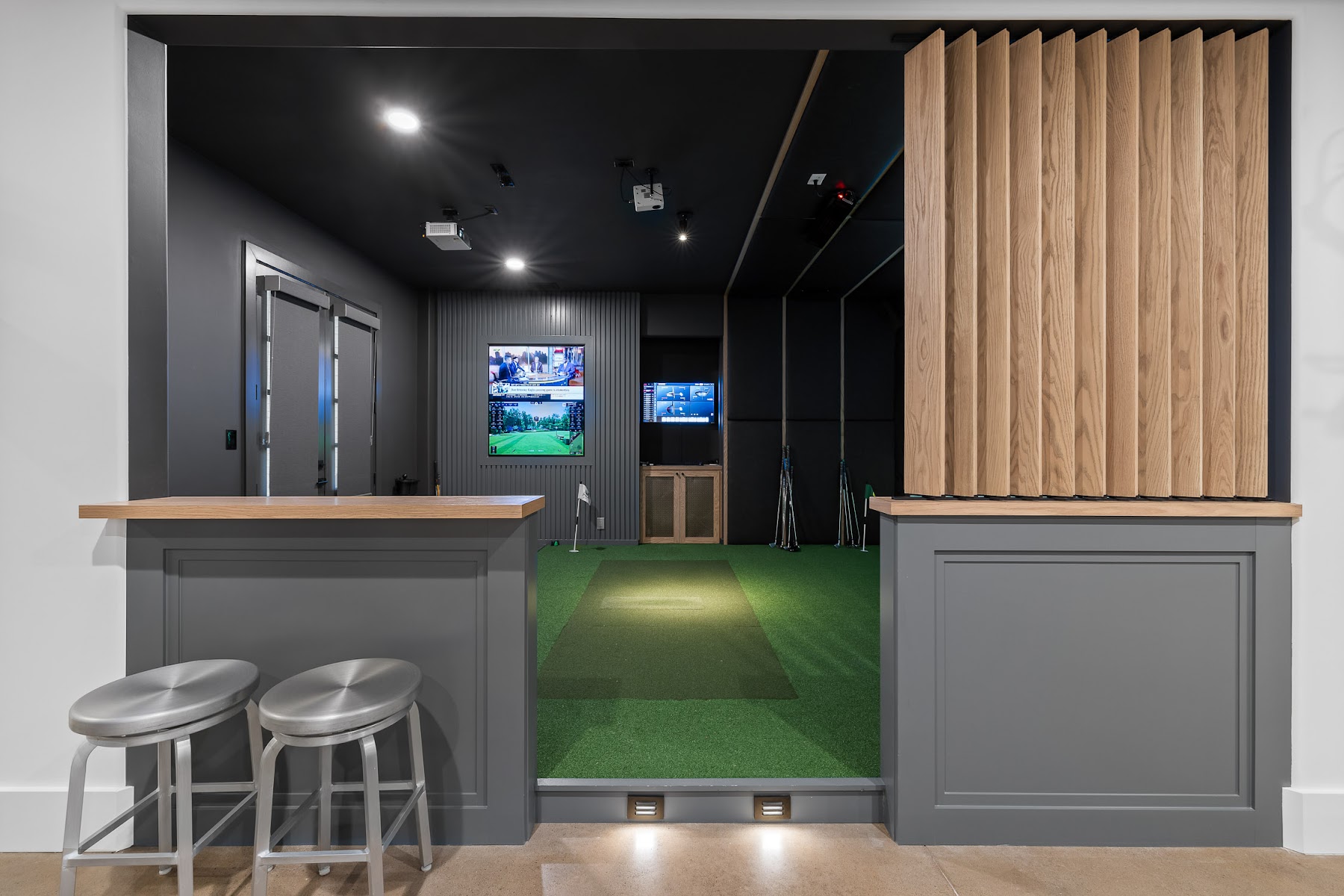
Cliff Stevens: You need ingress and egress. People are coming in and out of your facility. One thing some of the smaller bar and lounge guys that we’re building now don’t think about is that you can’t just open the front door and dump right into a simulator area. You need an entrance area, just like any other restaurant would have, where you’ve got a check-in desk and a waiting area. You’ve got to think about how people are going to come in the door, and where they are going to wait and check in for their round, where they’re not intruding on the space and on people trying to enjoy the simulator areas.
You need an inflow and an outflow. Where are they walking through? How is the traffic going to flow? If I need to go from the door to Bay Number 5, I don’t want to be walking through four other golf simulator bays to get there and interrupting the people that are enjoying their time.
You need the golfer area, and then we like to always design a lounge area for each simulator bay. There need to be some seating areas and some bar stools for people to hang out while they’re not hitting their shots. Maybe there are people that aren’t even playing golf, and they want a place to lounge around. Think about Topgolf. You’ve got your bay where people are hitting out into the driving range. Then there’s a buffer zone of don’t walk in this area. Then you’ve got some seating where people can hang out, and the club storage. It’s got to be very intentional, thinking about the consumer experience of how they’re going to get there, how they’re going to show up, and how they’re going to use it.
If you’re starting to think about other areas like a bar and a lounge, and other gaming areas like racing simulators, arcade machines or pool tables, just like you would plan any other commercial space, you need to figure out what those pocket zones are. That means where people are going to hang out, and how they get from one place to another without interfering with other people.
We always partner with an architect who’s thinking about some of those things too. We’re all bringing our skills to the table to talk it through and plan it out. We go through it in painstaking detail with renderings and three d models, and we make tons of adjustments to get it right. Nobody should do that on their own, especially not somebody that doesn’t do it every day.
What are the most common golf simulator lounge design mistakes?
Cliff Stevens: Not planning enough space for people to have dwell time, lounge time or travel time is huge. If you look at a space and say, oh, wow, we can throw six simulator bays in this 2,000 square foot commercial facility to maximize revenue, that’s great. But you’re having transition time between people that are playing and people that are showing up for the next, quote, unquote, tee time. Where are they going to spend time while they show up fifteen minutes early and other people finish out their round?
Not planning the space appropriately and trying to cram too much stuff into a smaller space is a huge mistake. If you look at a financial model, you say, oh, well, we’re going to make more revenue if we put five bays in this 2,000 square foot space versus three. Sure, but then your guests are going to have a really bad experience.
We’ve seen customers not think a lot about storage. We have one in Nashville that we’re working on now. I can’t share the name yet, but it’s breaking ground here soon. It’s going to be a membership based model, and they didn’t think about where a member is going to store their clubs or their shoes. It’s like having lockers for your members that want to leave their bag there and show up every Tuesday and play, or have their sim shoes in their locker. That’s also another potential revenue stream. Can you charge that customer $10 or $15 or $20 for access to a locker where they keep their stuff?
It ties into the theme of wanting to put too much stuff into a small space. One client was having four simulator bays, and they were going to put a putting simulator in the middle. But then there was no ingress and egress. People were walking through the putting simulator to get to the golf simulators. It wasn’t ADA compliant. Anytime we do a big commercial facility, we get our three d design team involved. We fully render the space. We can think about how people are going to come in and out and how they’re going to get to the spaces. It’s like, I’m putting in a cool amenity, but that amenity might actually detract from the value of the customer experience because it degrades the experience.
Another one we’ll push for occasionally is this: have you thought about having some ability to have a private bay? If you’re going to build a five or six bay commercial facility, somebody might want to rent out one, two or three bays for a corporate event or a big birthday party. They want to have some privacy and some access to it. Not thinking about some level of privacy, and the convertibility of that privacy, is a huge mistake, I would say.
What revenue streams do golf simulator lounge owners overlook?
Cliff Stevens: The economics of these businesses just work better when you start to layer in things like high margin alcohol sales. At $40 to $70 an hour per bay, or $150 a month per member, the economics are decent. They can be good. But where we’ve really seen customers hit home runs is when they have other offerings. That includes high margin merchandising, and a really cool brand that people are actually going to want to wear on a polo shirt or on a hat, like the Forge Club in Holly Springs, Georgia. He did an amazing job. He’s got an amazing logo. He’s got a cool brand. His members love it. He sells quarter zips, polos, t-shirts and golf tees all day long. It’s another driver of the business for him, so he doesn’t have to just rely on people showing up and being members. There’s all the ancillary revenue, and not planning to have something to address that is, to me, a huge mistake.
Even if you’re not going to build a full commercial kitchen, you can have these quick ovens. You can have preprepared meals. You can have snacks. You can have vending machines. There are alcohol vending machines now. Think that through, because that’s where we see the economics of these businesses become way more viable and way more exciting, as opposed to just $30 to $60 an hour for a golf bay.
Have you ever seen a bowling alley without an arcade, without selling merchandise, without a bar or a restaurant, and without selling beer? You should have somebody bringing beer to everybody in their golf sim room. There’s a concept here in Atlanta, a restaurant called Stats, where they had these automated beer pouring taps at your table. You have three or four beers at your table, and you put your credit card down, and however much you pour is how much you get charged. Why not throw that in a golf simulator bay? That’s not an expensive thing to add on. It saves you on the human costs of having a waiter or waitress bringing stuff to people all day. What are all those other ancillary ways you can make money other than the $30 to $50 an hour for the bay?
We’ve seen some of our more successful customers run summer camps. They have kids golf clinics or camps taught by a PGA tour professional. They’ll rent out bay time and have a revenue sharing model with a training professional, meaning somebody giving golf lessons in the facility. They’re doing golf club fittings in the facility and selling those golf clubs to their customers. In that Forge Club example, he has a partnership with Mizuno. He’s got a training professional in there. He does club fittings. Now he sells you your clubs and charges you for your club fitting. That’s a whole other revenue stream, and it’s something cool for the members to be able to do. Hey, I got my club fitting at the club I’m a member at. There are all sorts of things that people just don’t think about, and they are keys to these businesses being successful in the long term.
Frequently Asked Questions
How many simulator bays should fit in a 2,000 square foot lounge?
Cliff Stevens cautions against squeezing five or six bays into 2,000 square feet just because the financial model shows more revenue. Guests arriving early for the next tee time need somewhere to wait. Cramming the space leads to a really bad guest experience.
Should a golf simulator lounge have member lockers?
Yes, especially for a membership model. Members may want to leave their bag and sim shoes on site for weekly play. Stevens notes that lockers could also be charged at $10 to $20 as another revenue stream.
Why does a golf lounge need a private bay option?
In a five or six bay facility, groups may want to rent one to three bays for a corporate event or a birthday party, and they want some privacy. Stevens calls failing to plan for that privacy, and for making it convertible, a huge mistake.
What revenue can a golf simulator lounge earn beyond bay rentals?
Stevens points to high margin alcohol sales, branded merchandise, quick food options and vending machines. He also lists lessons with a revenue share, kids camps, and club fittings with club sales. Self-pour beer taps at each bay are another low cost add-on.
How should guests enter a golf simulator lounge?
The front door should not open directly into a simulator area. Stevens recommends an entrance with a check-in desk and a waiting area. The traffic flow should let guests reach their bay without walking through other bays.
Edited for length and clarity from a recorded conversation with Cliff Stevens.